Lesson 9:

What is a gear train?
A gear train is a mechanism made up of more than two toothed wheels. They are very useful as let large reductions or increases in speed, something that would be very difficult to achieve with just one gear. They also allow the modification in the direction of rotation of the axles as desired.
Types of gear trains.
Two different types of gear trains can be distinguished depending on how wheels and axles are placed.
Simple gear trains.
Are gear trains in which the wheels are arranged one after the other, each one connected to a different axle. In this case, large speed changes are not achieved as only the first and the last wheels affect the change of speed. They are mainly used to change the direction of rotation of the axles. The middle wheel is called the idler wheel.
In the two simple gear trains below the number of teeth of the first and the last wheel is exactly the same while the idler wheels are different. As you can see, the number of teeth of the idler wheel doesn’t affect the angular speed of the last wheel. Its only function is to change its direction of rotation, which thanks to it is the same as the first one.

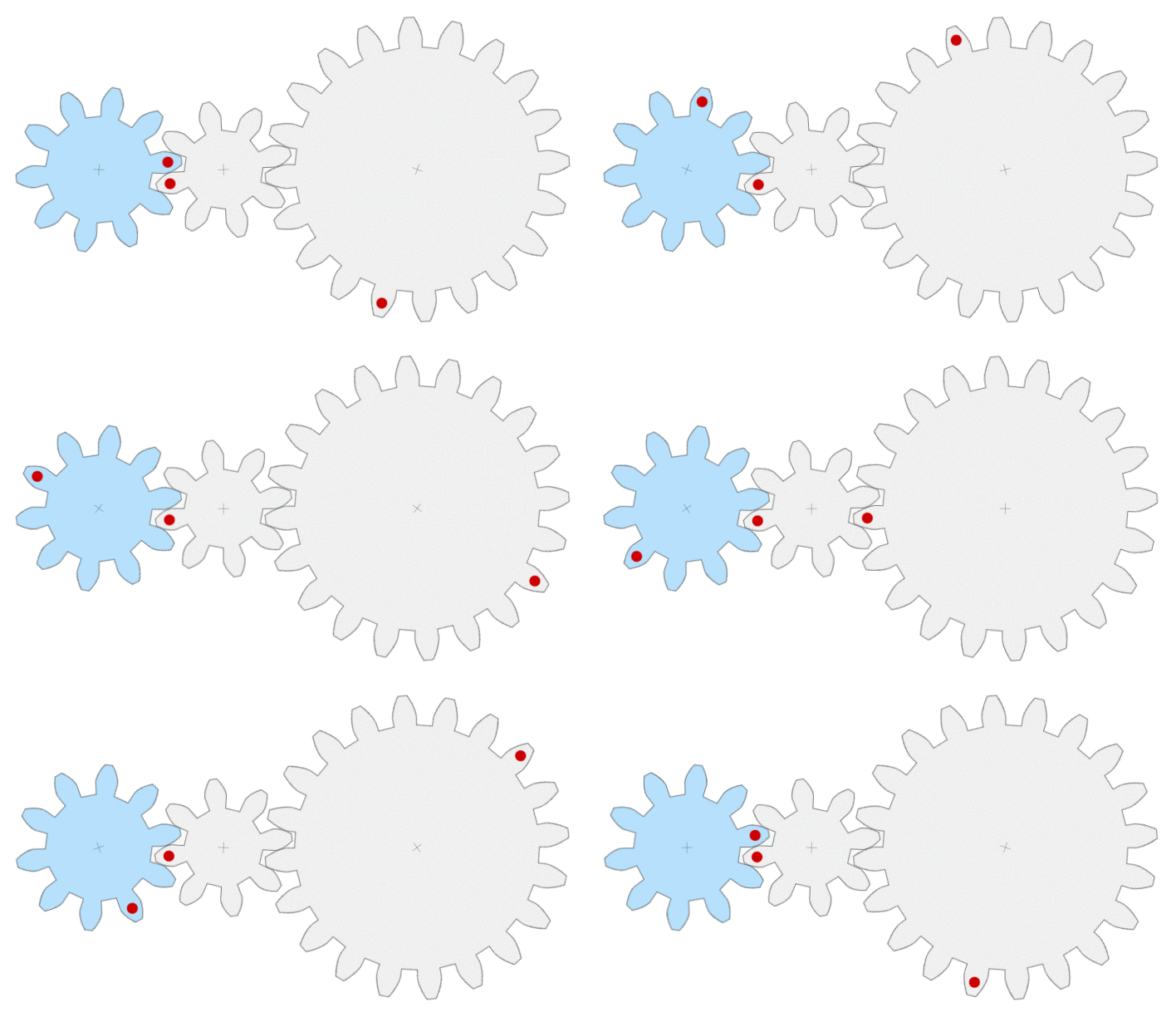
They can be:
- Reducing simple gear trains: if the last wheel rotates slower than the first one.
- Multiplying simple gear trains: if the last wheel rotates faster than the first one.
Compound gear trains.
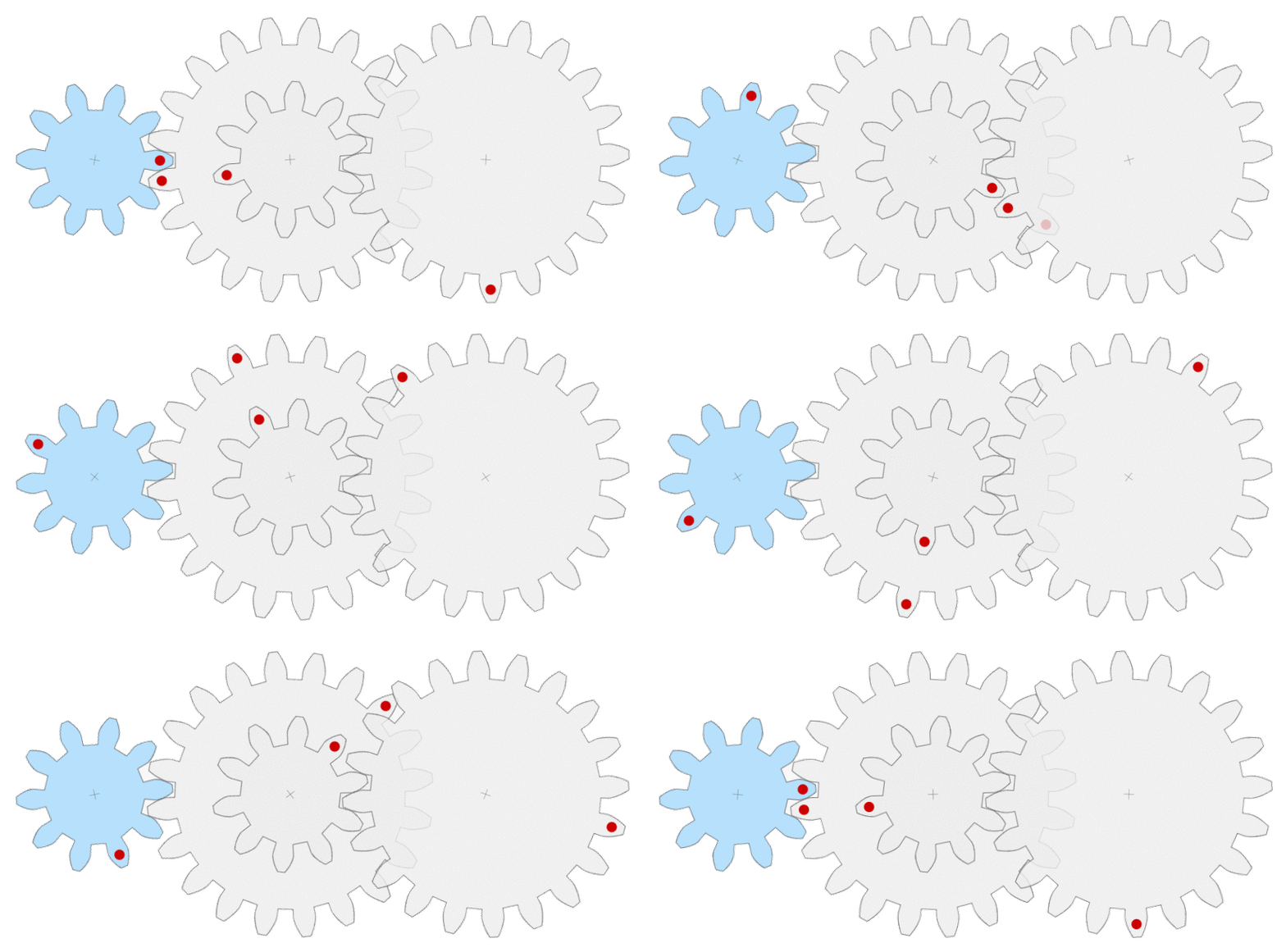
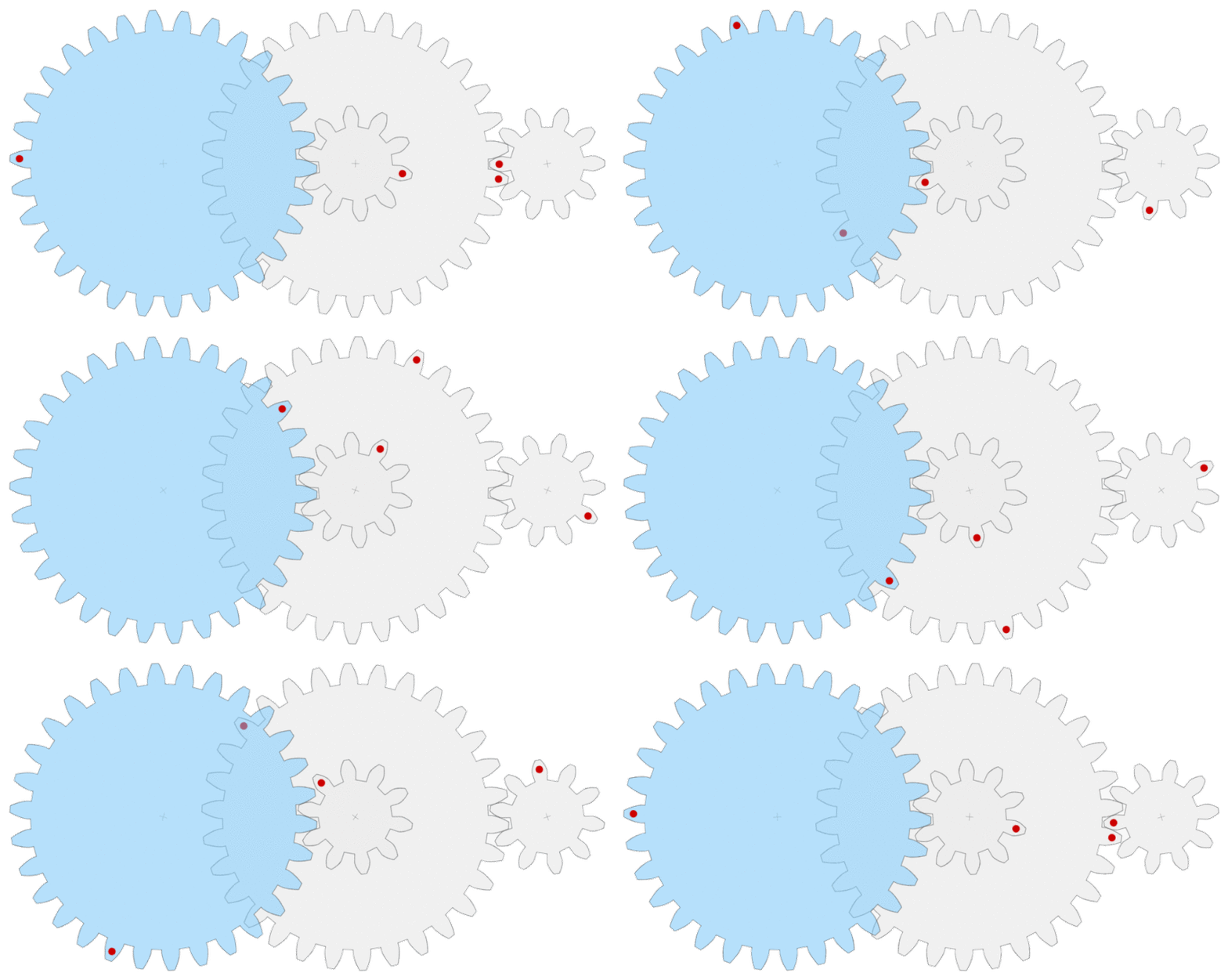
Are the most widely used since they allow the speed to be varied as much as desired (it will be explained on page 9). The difference with respect to simple trains is that, in this case, several wheels are arranged on the same axle. For example, the following gif shows a compound train in which the two middle wheels are attached to the same axle. This way it is possible to greatly reduce the speed of the sprocket on the right.
- Reducing compound gear trains: if the last wheel rotates slower than the first one.
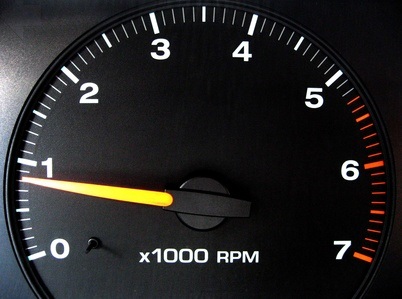
This type of gear train is used for example in cars. Think of a car engine turning at thousands of revolutions per minute (1000, 2000, 3000…). The next time you get in a car, you can look at the gauge where it says «RPM» to check the angular speed of the engine in different situations.
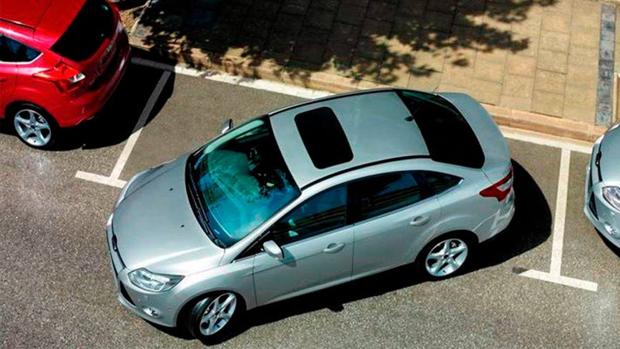
Obviously that speed is excessive in some cases, for example when you want to park the car in a narrow space that requires slow and precise movements. The solution to decrease the speed of the wheels is to connect them with a reducing compound gear train.
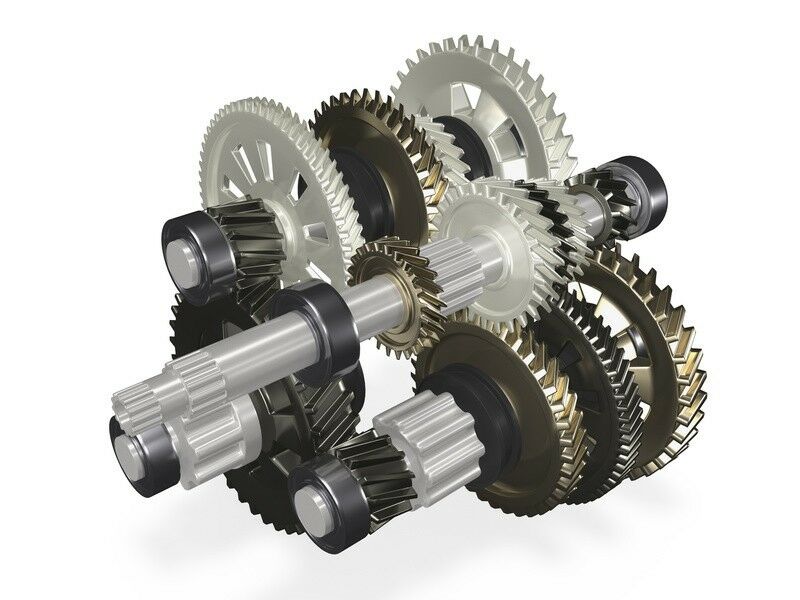
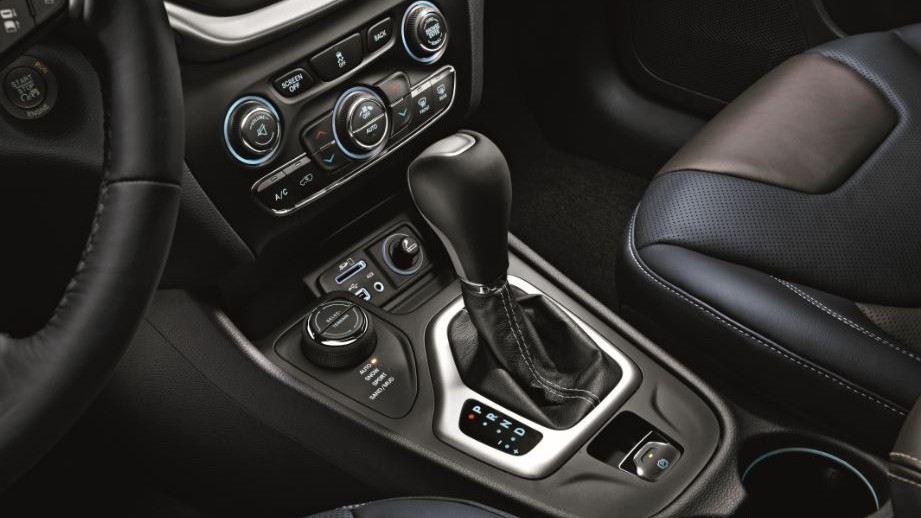
That gear train is located in a part of the vehicle known as the gearbox, in which a large number of gears trains can be found (image below, left). Depending on the chosen gear train combination, it will be possible to adjust the speed of the wheels to the situation. The speed required to drive on a highway is obviously not the same as the speed needed when driving on a narrow street with plenty of curves.
Selecting the most suitable gear set is exactly what is done when changing the position of the gear lever (center image).
- Multiplying compound gear trains: if the last wheel rotates faster than the first one.
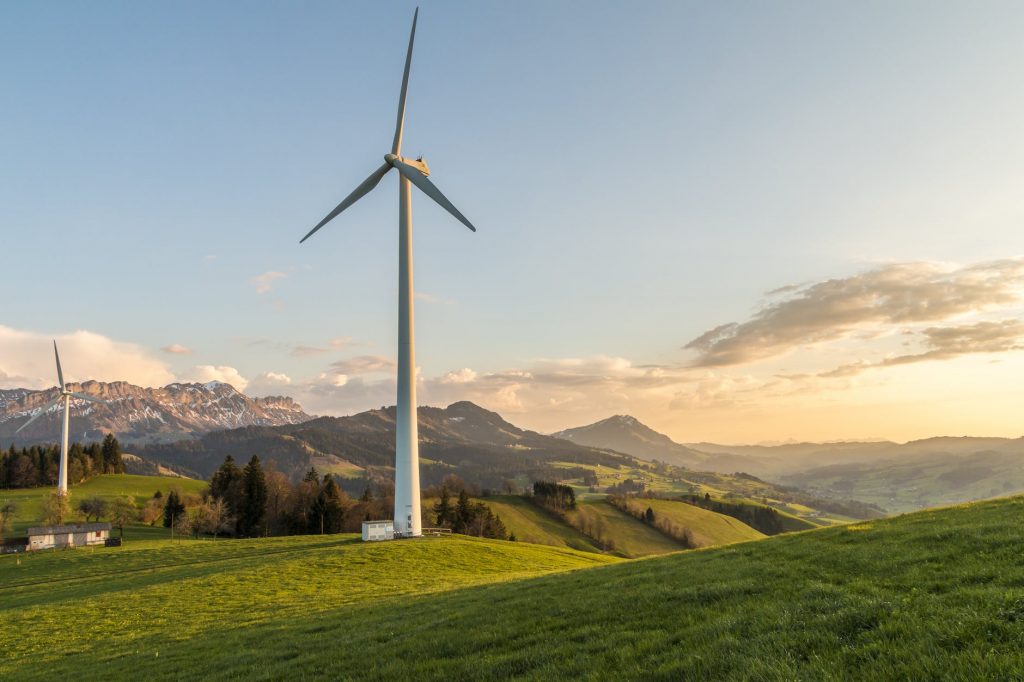
One of the most interesting applications of this type of train can be found in wind turbines. A wind turbine is a machine that transforms the kinetic energy (energy of an object that moves) of the blades of a windmill into electrical energy (the one electrons transport when moving in an electric current).
However, in order to generate a useful electrical current, rotational speeds greater than those that the wind is capable of providing are needed. For this reason, compound multiplying gear trains must be connected to the axle of the blades, in such a way that even if they move at low speed, electrical energy can be generated.
The gear ratio of a gear train.
As it happened with simple gears (two wheels) the gear ratio of a gear train can be simply calculated by dividing the angular speed of the last wheel by the angular speed of the first wheel:
\huge GR_{\ gear\ train}= \dfrac{n_{last}}{n_{first}}However, when calculating the gear ratio of a train from the number of teeth of its wheels things get a little bit harder. In this case, different steps must be followed depending on the type of gear train (simple or compound).
- In simple gear trains: the gear ratio can be calculated from the number of teeth of the first and last wheels in the train. The number of teeth on the intermediate wheels is completely irrelevant. Therefore:
This is the explanation:
To calculate the transmission ratio of a gear train, what must be done is to multiply the transmission ratios of each pair of wheels of the gear train that are meshed together. In the case of a simple train, the first wheel is attached to the second, the second to the third, the third to the fourth… Imagine a simple train made up of 6 wheels. In that case, the gear ratio would be:
\LARGE GR_{\ simple\ gear\ train}=GR_{1-2} \cdot GR_{2-3} \cdot GR_{3-4} = \dfrac{Z_1}{Z_2} \cdot \dfrac{Z_2}{Z_3} \cdot \dfrac{Z_3}{Z_4} \cdot \dfrac{Z_4}{Z_5} \cdot \dfrac{Z_5}{Z_6}As you can see, all the terms, except the first and the last, are repeated in the numerator and in the denominator of the fractions, so the equation is greatly simplified:
\LARGE GR_{\ simple\ gear\ train}=R_{1-2} \cdot R_{2-3} \cdot R_{3-4}... = \dfrac{Z_1} \textcolor{red}{ \cancel{Z_2}} \cdot \dfrac \textcolor{red}{ \cancel{Z_2}} \textcolor{red}{ \cancel{Z_3}} \cdot \dfrac \textcolor{red}{ \cancel{Z_3}} \textcolor{red}{ \cancel{Z_4}} \cdot \dfrac \textcolor{red}{ \cancel{Z_4}} \textcolor{red}{ \cancel{Z_5}}\cdot \dfrac \textcolor{red}{ \cancel{Z_5}}{Z_6}= \dfrac{Z_1}{Z_6}- In compound gear trains: the number of teeth of all the wheels affect the final speed, so all of them must be considered to calculate the gear ratio:
Or, writen in a different way:
\huge GR_{\ compound\ gear\ train}=\dfrac{Z_1 \cdot Z_3 \cdot Z_5 ...}{Z_2 \cdot Z_4 \cdot Z_6 ...}This is the explanation:
As in the previous case, the gear ratio of the gear train must be calculated by multiplying the gear ratios of those wheels that are meshed together. The difference is that, in the case of a compound train, wheels two and three are on the same axle and the same goes for wheels three and four. Therefore, wheel one is linked to wheel two, wheel three to four, wheel five to six… This difference means that the terms of the equation do not cancel:
\LARGE GR=R_{1-2} \cdot GR_{3-4} \cdot GR_{5-6}... = \dfrac{Z_1}{Z_2} \cdot \dfrac{Z_3}{Z_4} \cdot \dfrac{Z_5}{Z_6}...*Problems 1 to 4.