Lesson 5:

Electrical quantities.
Maybe the concept of physical quantity sounds familiar to you from your physics and chemistry lessons. A physical quantity is a property that can be measured. Some examples are:
- Length, that can be measured with a ruler for example, whose unit is the meter.
- Time, that can be measured with a chronometer, whose main unit is the second.
- Mass, that can be measured with a weighing scale for example, and whose main unit is the kilogram.
There are many different physical quantities, but in this unit we’ll be only interested in the physical quantities that are related to electricity and electric currents, what we call: electrical quantities. The first three electrical quantities (intensity, voltage and resistance) have been already studied in 1st of ESO, but we’ll review them because of their importance. Those three quantities can be measured with the same device, that is called multimeter:
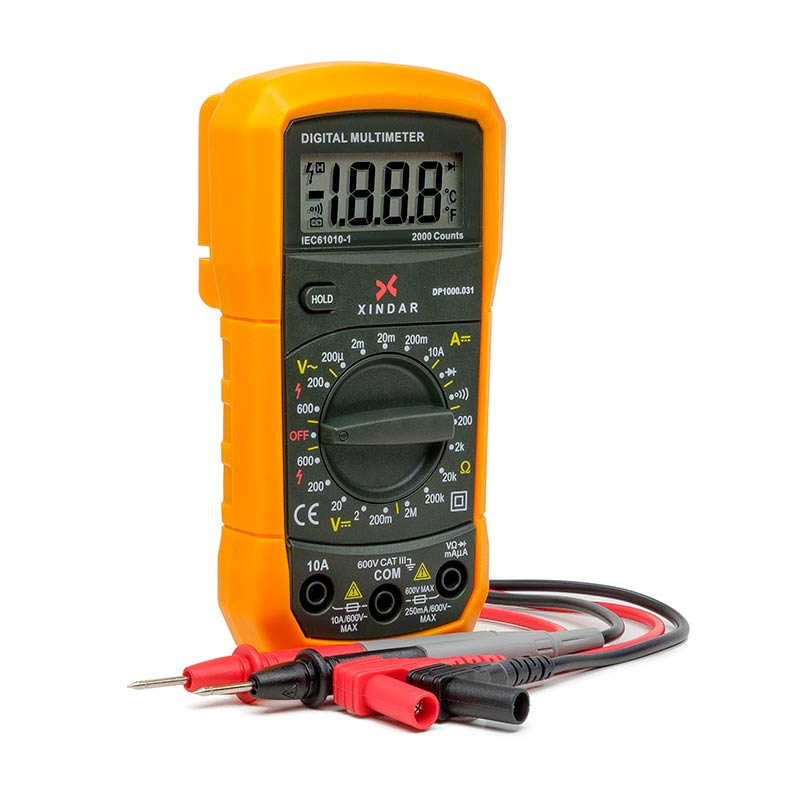
As you can see, this device has a selector switch that allow to select which of the three quantities is going to be measured (a workshop lesson will be dedicated to it).
Electrical intensity of a current.
We call electrical intensity (or just electric current) to the number of electrons that flow through a conductor in a certain amount of time (a second usually). Its abbreviation is the letter I.
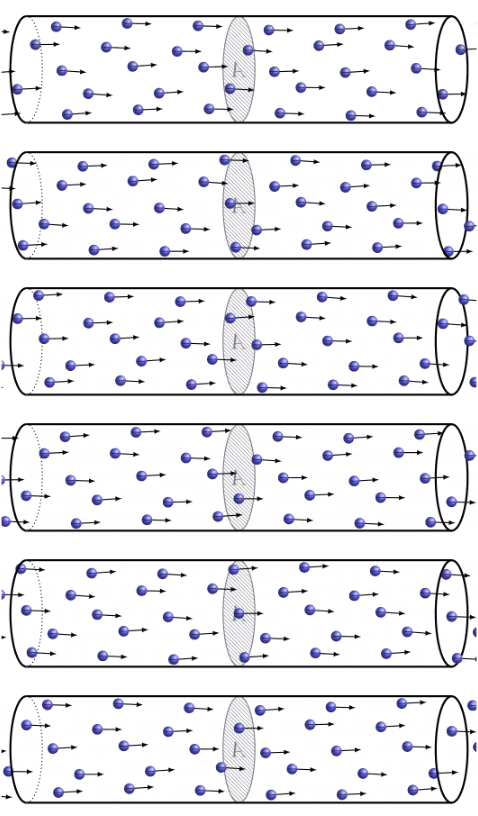
Electrical intensity could be measured by directly counting how many electrons cross a wire during a second. However that’s not practical for one simple reason, the number of electrons that make an electric current is huge. Imagine that you had to tell «the electric current has an intensity of 1.000.000.000.000.000.000.000.000 electrons per second». This would be too confusing and difficult to express.
To solve that problem, a different unit was created to measure electrical intensity: the ampere (sometimes abbreviated as amp). The ampere is represented with the letter A. Therefore if we want to say that the intensity of an electric current is three amperes we can write it in a shorter way as: I=3A.
But maybe you are asking yourself how many electrons make an ampere. Well, if we say that the intensity of an electric current is 1A it means that, each second, the following number of electrons flow:
6.241.509.074.460.762.608
There’s a reason why that number was selected as the unit of intensity but we are not going to explain it here. The important thing is that using this unit is much easier than directly counting the number of electrons.
Finally, we are going to see some examples of typical intensity values in different kinds of electric current:
| Electric current | Intensity | |
|---|---|---|
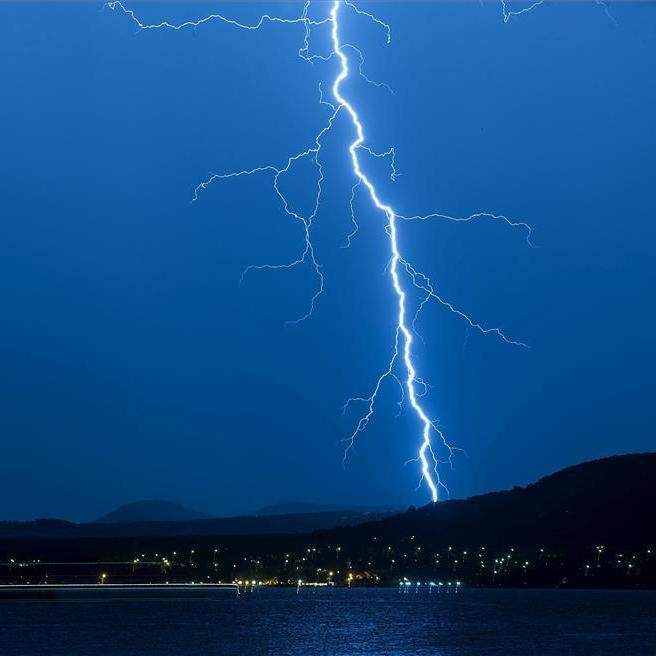 | Ray | 10.000 A |
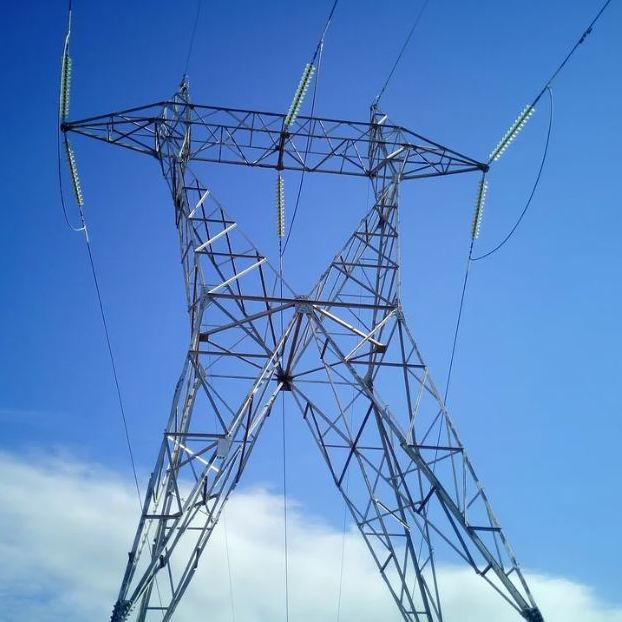 | Transmission tower | 300 A |
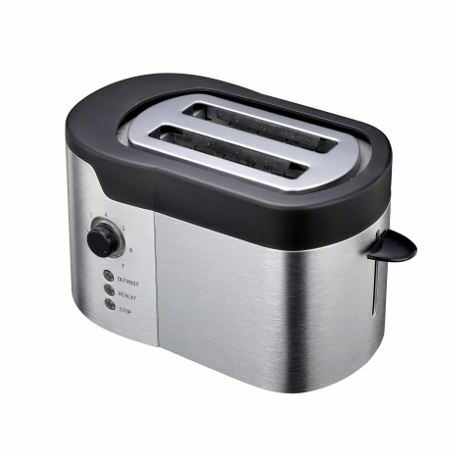 | Home appliance | 1 a 6 A |
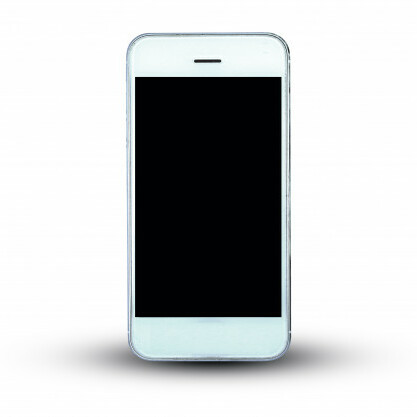 | Mobile phone | 0,02 A |
Voltage of a current.
Apart from its intensity (number of electrons), electric currents have a property called voltage. I’m sure that you’ll have seen a high voltage sign, like the one on the right, in some place. Those signs warn of the danger of approaching an area with electrical circuits that carry electric currents with very high voltages that could cause some kind of accident:
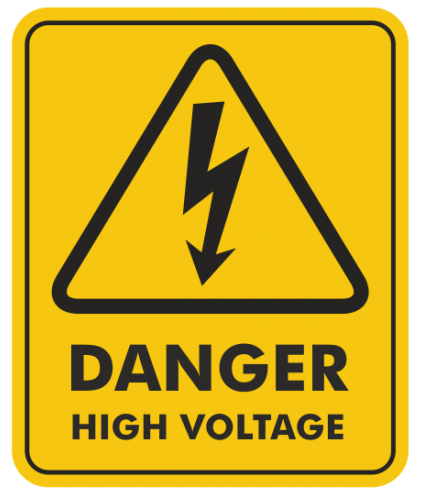
But, what is voltage? The voltage of an electric current is related to the energy of the electrons of that electric current. The more energy the electrons of an electric current have the higher the voltage of that electric current will be. Voltage is represented with the letter V.
When the voltage of an electric current is very high its electrons have a lot of energy, which can make them jump from the wires creating an electric current through the air. This is known as electric arc. This is the reason why those electric installations that use high voltage currents might become dangerous if an accident occurs. The following video shows how an electric arc is formed:
The unit of the voltage is the volt, which is also represented by the letter V. Therefore if we want to say that the voltage of an electric current is 5 volts we can abbreviate it as: V=5V. Realize that, in this case, the letter used for the quantity and its unit is the same, but you must remember that depending on the case, the letter V will represent one or another thing.
In this table you can see typical values of voltage of different electric currents:
| Electric current | Voltage | |
|---|---|---|
| Ray | 100.000.000V |
| Transmission tower | De 100.000 a 400.000V |
| Home appliance | 230V |
| Mobile phone | 5V |
Above, we’ve explained that voltage is a property related to the energy of electrons. However, you may hear talk about the voltage of an electrical component. For example, if you go to an electronic shop you can buy bulbs of very different voltages. Below you can see some examples:
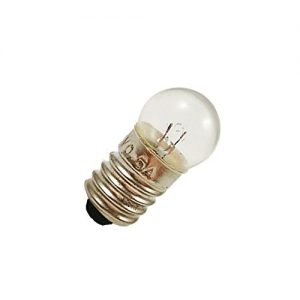
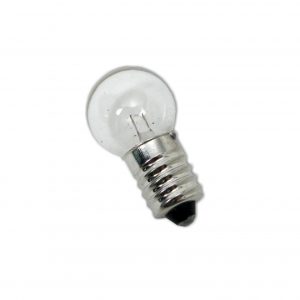
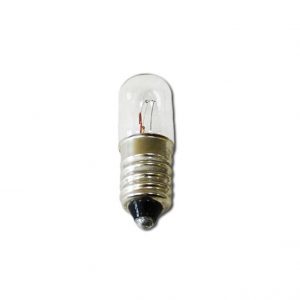
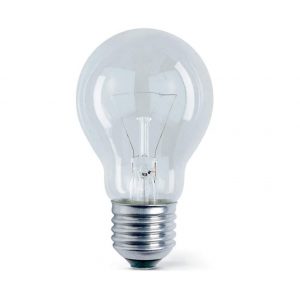
And exactly the same happens with motors, buzzers… But, what does it mean that the voltage of a bulb is, let’s say, 12V? Very easy, it means that an electric current with a voltage of 12V is necessary if we want the bulb to emit light properly. Or, said in another way, it means that electrons will consume an «energy» of 12V when flowing through it. Therefore it also means that an electrical source of 12V will be necessary to turn that bulb on because, otherwise, the electrons of the current won’t have energy enough to power it. If a lower voltage is provided to the bulb it might shine but very little. If a higher voltage is provided the bulb might blow.
Electrical resistance of a component.
To better understand what the electrical resistance is you can imagine electrons flowing through an electrical wire just like drops of water flow through a pipeline. Each of the electrical components that electrons must go through in a circuit is like a little obstacle for them so, in order to flow through them they need to spend some of its energy.
The electrical resistance is a measure of how difficult it is for electrons to flow through an electrical component. It is represented by the letter R.
The higher the resistance of a component the most difficult it will be for electrons to cross it, so they will need to spend a big part of their energy. On the contrary, a component with little electrical resistance is a component that electrons will flow through without much effort, that is, not losing too much energy.
As it happened with intensity and voltage, electrical resistance has its own unit of measurement, which is called ohm and is represented with the letter omega (Ω) which is the letter O in greek.
All components have a certain electrical resistance that depends on how it is made, its materials… For example, a little electrical motor, (like the one in the image) may have a resistance of around 30Ω. The only way to know the resistance of a component is by measuring it with a multimeter.

Electrical power of a component.
The electrical power of an electrical component represents how fast that component consumes the electric energy from an electric current. A component with high power will consume more energy than another with lower power. This quantity is represented by letter P. The unit of power is the watt, that is abbreviated with the letter W.
Electrical power can be calculated easily if you know the intensity and the voltage of a component just by multiplying the intensity of the current that flows through it and its voltage:
\huge P=V \cdot IWe’ve already seen that each kind of component has a lot of different models, a good example of it are motors. A little motor used to move a children toy will need a much smaller electric current than, for example, the motor of a washing machine. Let’s calculate the power of those two models of motor:
- Toy motor: I = 0,05A V = 12V
- Washing machine motor: I = 6A V = 230V
Applying the formula seen before to each of the cases we get:
\Large P_{toy motor}=V \cdot I = 12 \cdot 0,05 = \textbf{0,6W} \Large P_{washing m. motor}=V \cdot I = 230 \cdot 6 = \textbf{1380W}Now that you already know how to calculate the power of a component I propose you a slightly different problem. If you take any of the home appliances of your house (mixer, toaster, vacuum cleaner…) you will probably find a label with its power written on it. The vacuum cleaner on the image below, for example, has a power of 600W. All home appliances are usually connected to one of the sockets of the house which, as we’ve already seen, in Europe provide a voltage of 230V. Could you calculate the intensity that will flow through the vacuum cleaner (through its motor, in fact) with those data?
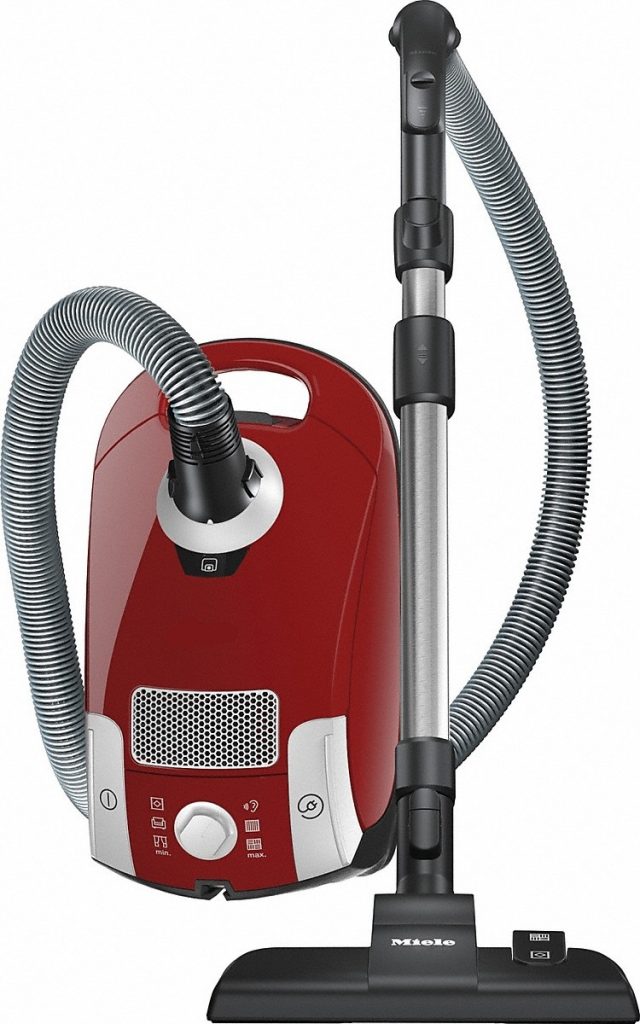
Data:
Entering the data into the equation:
\normalsize 600 = 230 \cdot ISo the value of intensity is:
\normalsize I = \dfrac {600}{230}=2,6ASolution: \normalsize \textbf{I = 2,6A}
Electrical energy.
A lot of different types of energy exist in nature:
- Any object placed at a certain height has potential energy.
- An object that moves at a certain speed has kinetic energy.
- An object at a high temperature has thermal energy.
Electrical energy is simply the energy stored in an electric current. That energy is provided by the source (a battery for example). Energy is represented by letter E. Its measurement unit is the Joule, which is abbreviated with letter J.
As we’ve seen before, some electrical components, called loads, are able to extract that electrical energy from the currents in order to generate another kind of energy. For example, a motor transforms electrical energy into kinetic energy (movement). But, how can we calculate the electrical energy consumed by an electrical component?
The energy consumed depends on two factors:
- Of the electrical power of the component: as explained before, electrical power represents the speed with which an electrical component consumes electrical energy. Therefore, the higher the power the higher the energy consumed.
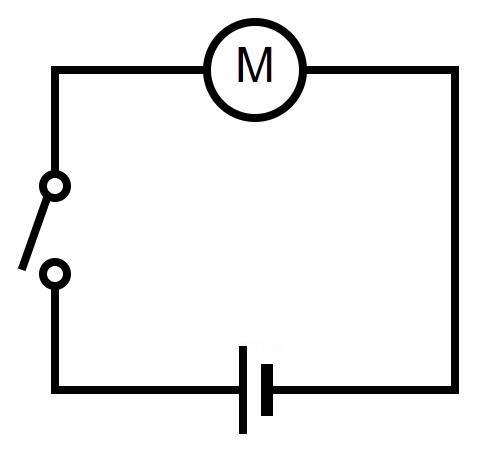
- Of the time (t) the component is connected (with electric current flowing through it): an electrical component only consumes energy when it is working. For instance, in the circuit below the motor is not consuming energy because the switch is opened. It will only consume energy if the switch is closed and obviously it will consume more energy if the switch is closed for 5 minutes than if it is only closed for 2 minutes. Therefore the longer a component is working the more energy it will consume.
The formula used to calculate the energy consumed by a component is:
\huge E=P \cdot tRemember to enter the power in watts and the time in seconds. If, for example, time is given in hours in a problem the first step will be changing it to seconds, otherwise the result will be wrong.
Let’s see a practical example. Imagine we connect the vacuum cleaner from the previous exercise for 5 minutes to vacuum the living room. How much energy will be consumed?
Data:
Entering the data:
\normalsize E = 600 \cdot 300 = 180000JSolution: \normalsize \textbf{E = 180000J = 180kJ}