Lesson 4:

Vaulted structures.
Vaulted structures are those that stand thanks to arches that support its weight. However, to better understand the reason why vaulted structures appeared, we need to go back many years in time, before they had been discovered. Since ancient times, people began to build large stone buildings that they usually devoted to their gods. A good example of this is the Temple of Luxor, built during the Egyptian Empire dedicated to the god Amun. As you can see in the image, the stone columns of this temple (and many more from that time) occupied most of the area, not allowing wide spaces inside the building. The reason why such thick columns were necessary was to support the very heavy stone ceiling that rested on top of them.
(Luxor Temple, republica.com)
Besides, the need to cover the distance between two columns with a single stone made it very difficult to place them too far from each other, simply because such big stones were very difficult to find in nature.
This suddenly changed when arches were discovered. Building an arch allows to connect two columns using stones that are small and easy to work with:
(With this arrangement stones fall down)
(When placed in an arch, stones rest on each other)
(Taken from , ¿Por qué no se cayó Notre-Dame? – Ter, Youtube)
During the Roman Empire arch-based structures played a fundamental role when it was necessary to cover a great distance, such as in the construction of bridges over rivers, for example. Throughout the Middle Ages there was a great development of vaulted structures that became more and more stylized, evolving from the Romanesque churches with their thick walls, to incredible Gothic cathedrals, much higher and spacious.
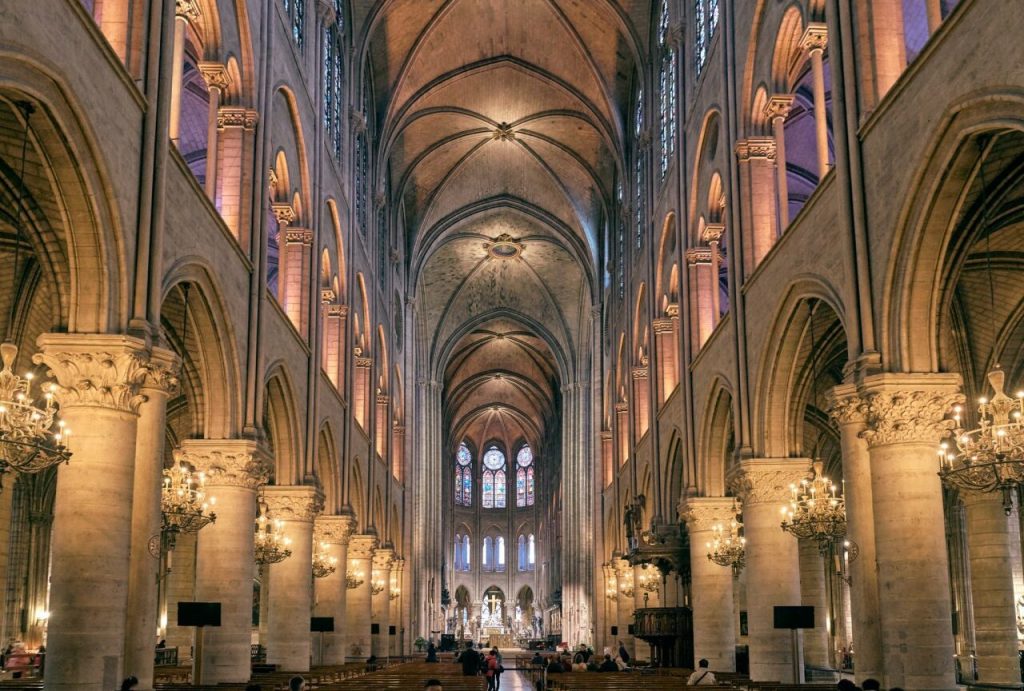
Vaulted sturctures aremade of three different elements:
- Arches.
- Vaults (the name vaulted comes from it).
- Domes.
The arch is the most basic element of the three. An arch is made up of two vertical columns joined by several angular stone pieces called voussoirs. The stone at the apex of the arch is known as the keystone, and is responsible for the arch not collapsing.
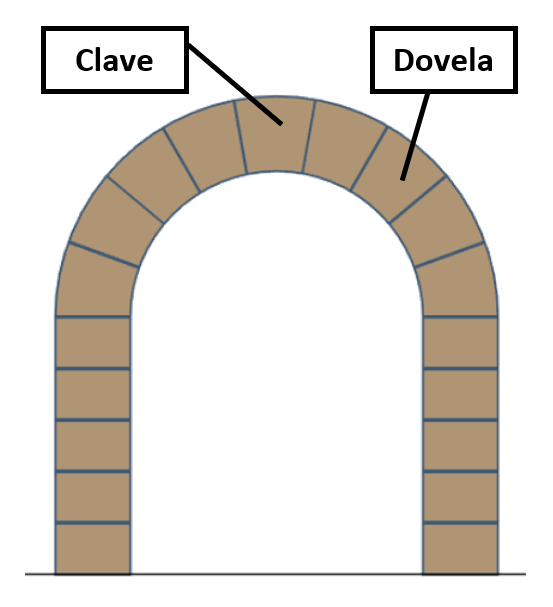
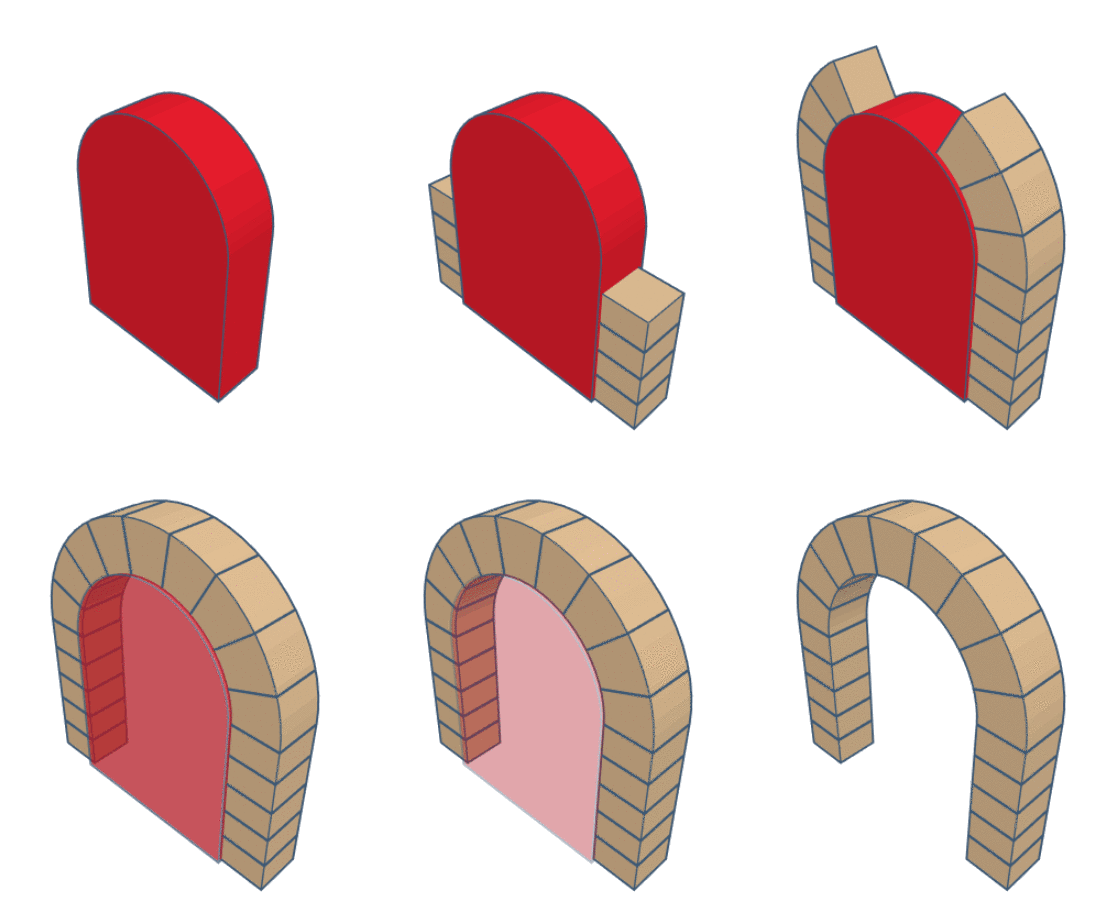
(Original images)
The method used to build an arch consists in placing a support called centring on which the voussoirs are placed. When all the parts have been placed the support can be removed and the arch stands.
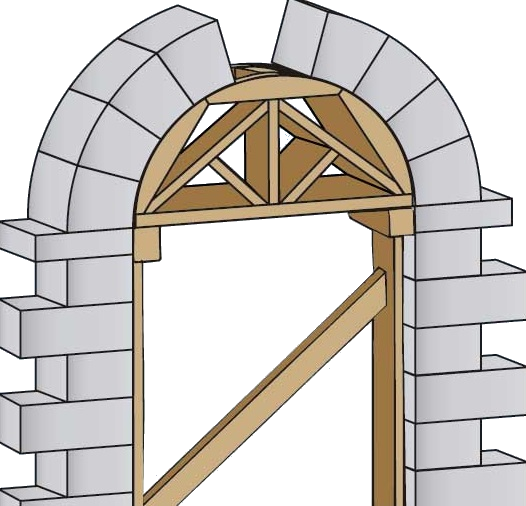
(Centring, glosarioartectonico.com)
A vault is a continuous arch that forms a ceiling:
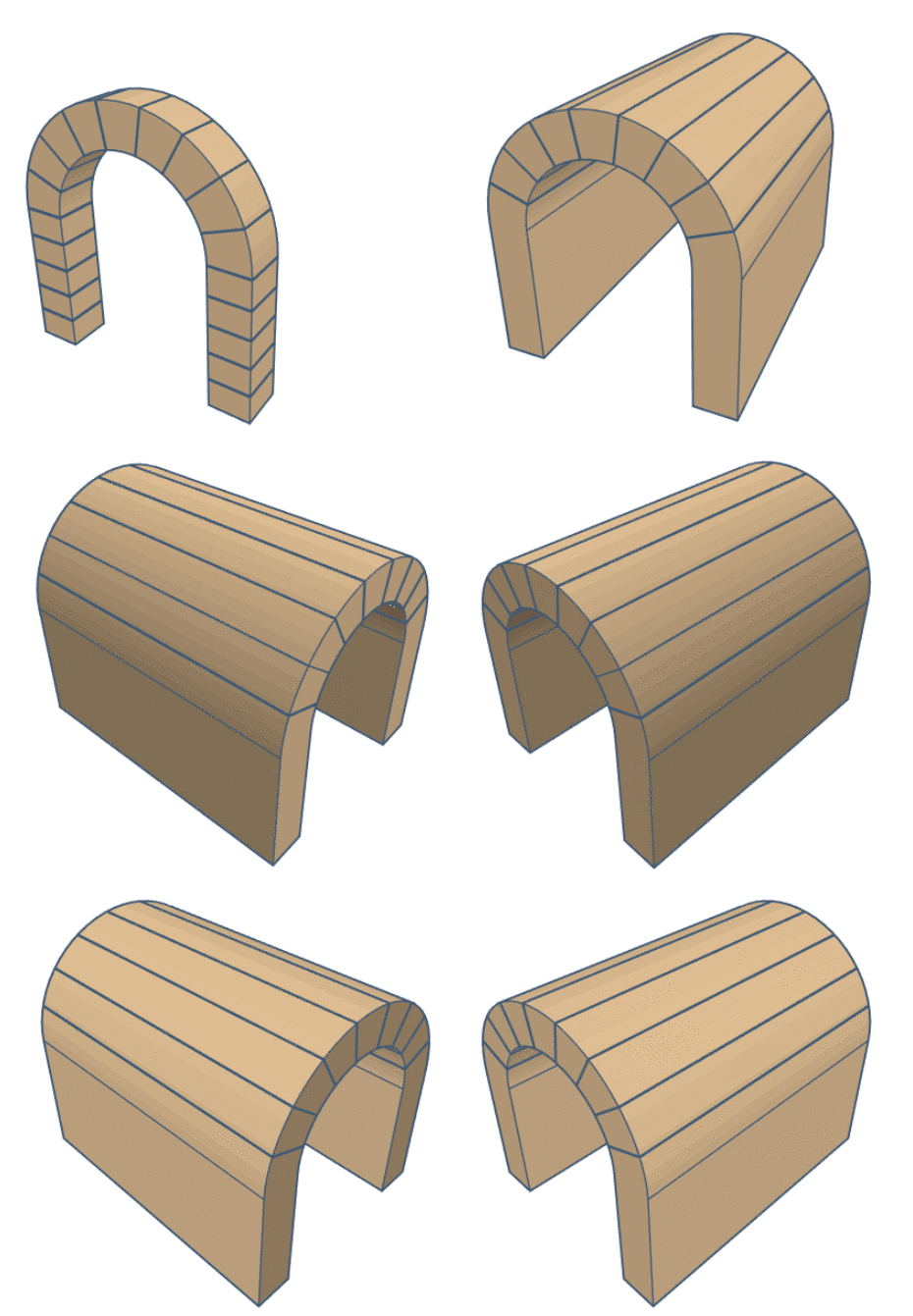
(Original images)
The vault is an architectonical element that has allowed the construction of many structures throughout history. For example, the Romans used them to build bridges which are still standing today. This way they managed to improve their road network throughout the empire.
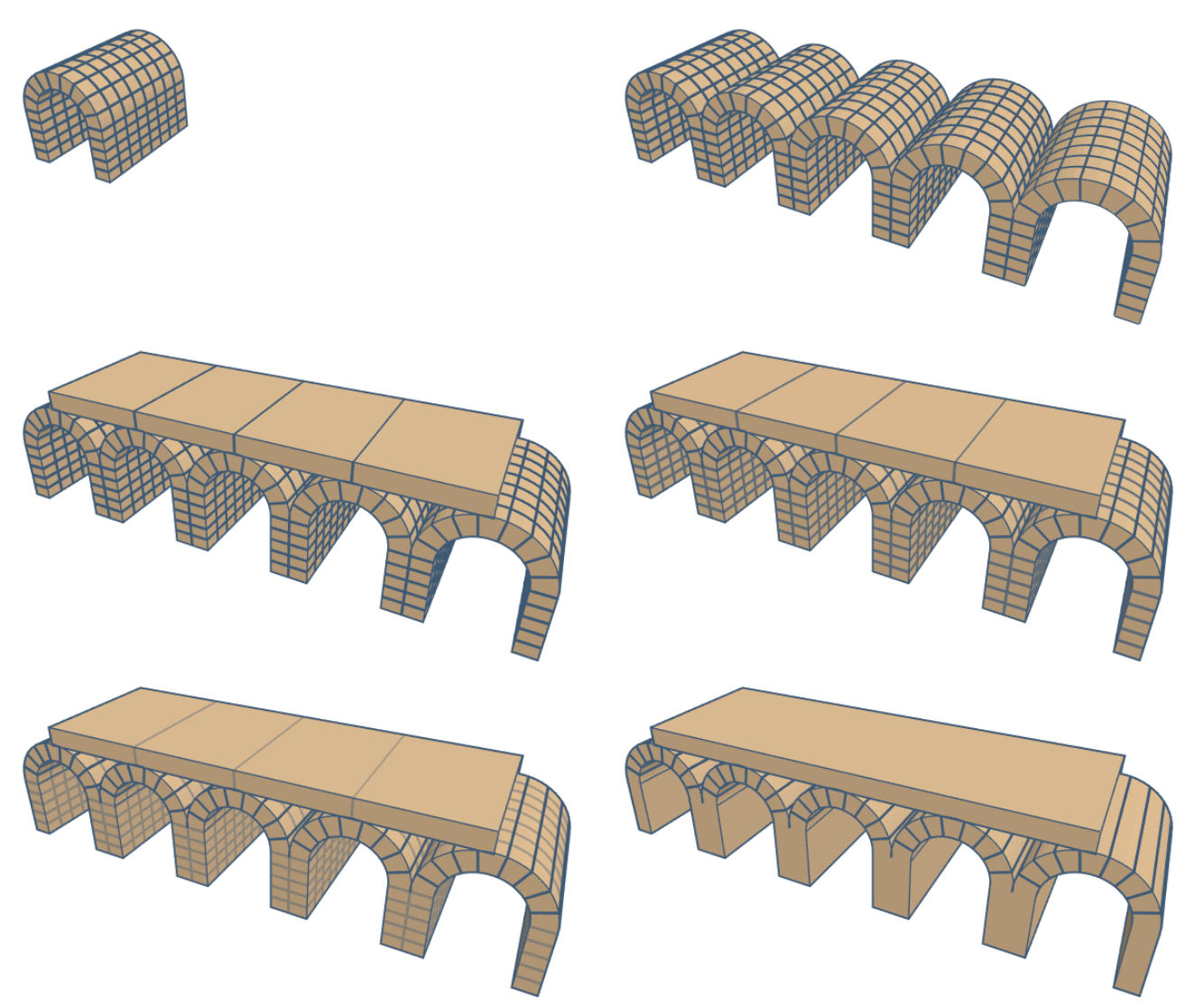
(Original images)
Imagine how many kilometers merchants of that time could save when they moved from one city to another thanks to the existence of bridges like the one in the image below, located in Mérida, over the Guadiana River. Or what it meant for the people living in roman cities to get water channeled through aqueducts like the one in the image on the right.
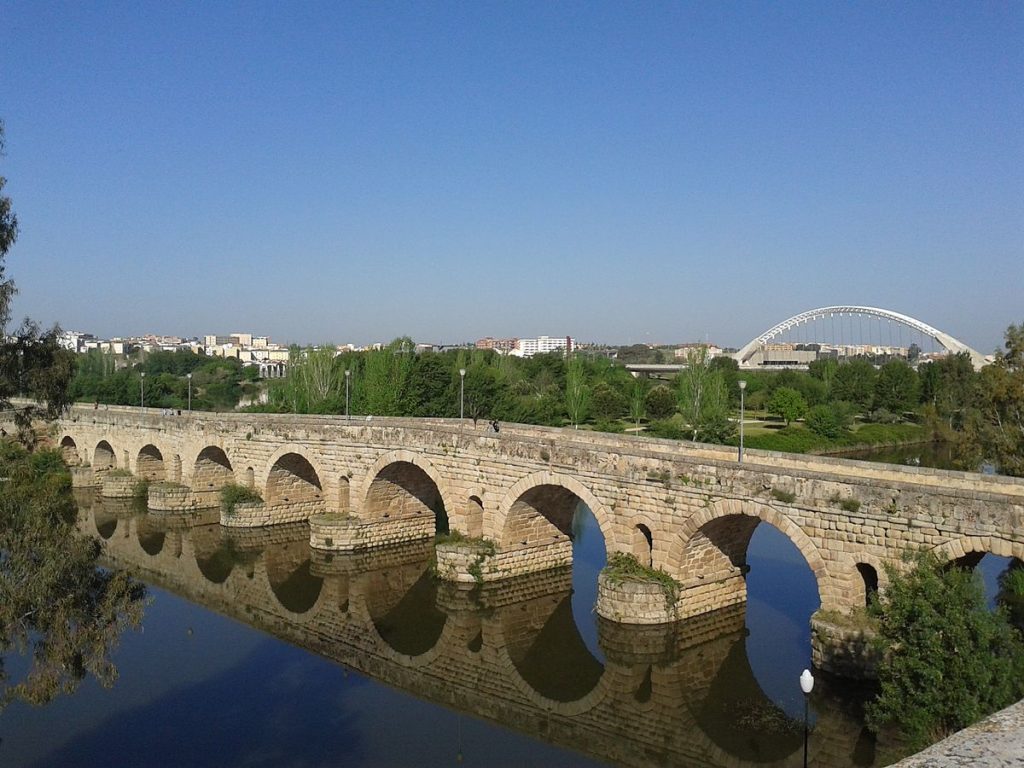
(A stray sheep, CC BY-SA 3.0 ES, Wikimedia Commons)
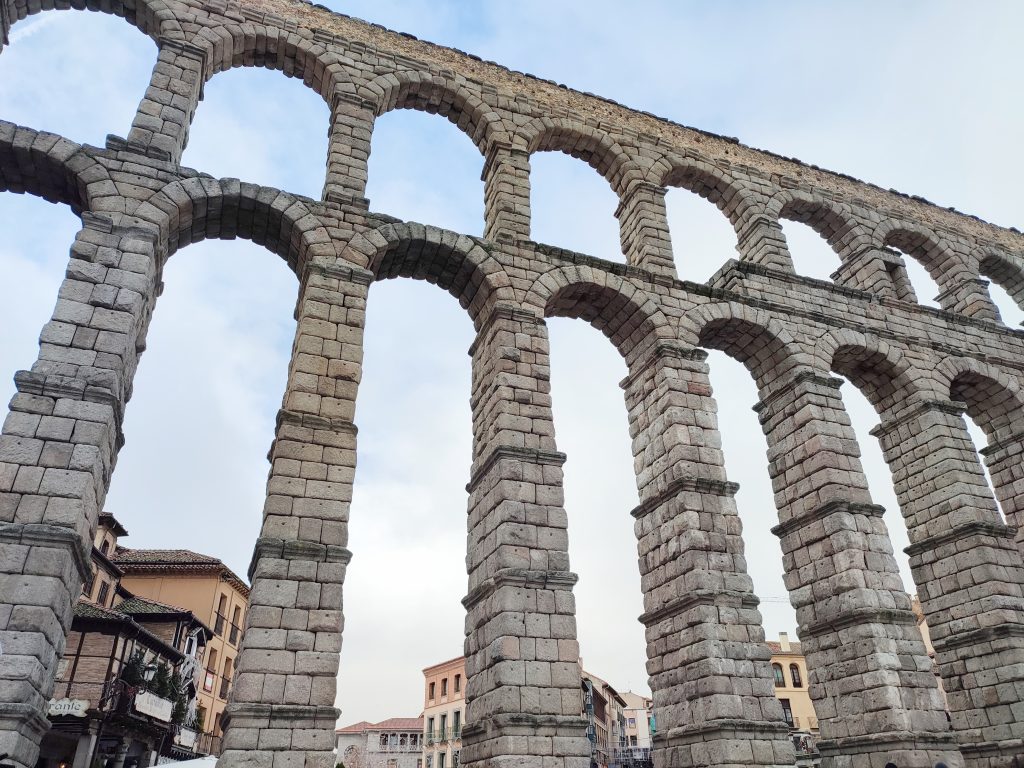
(Roman aqueduct of Segovia, Spain, original image)
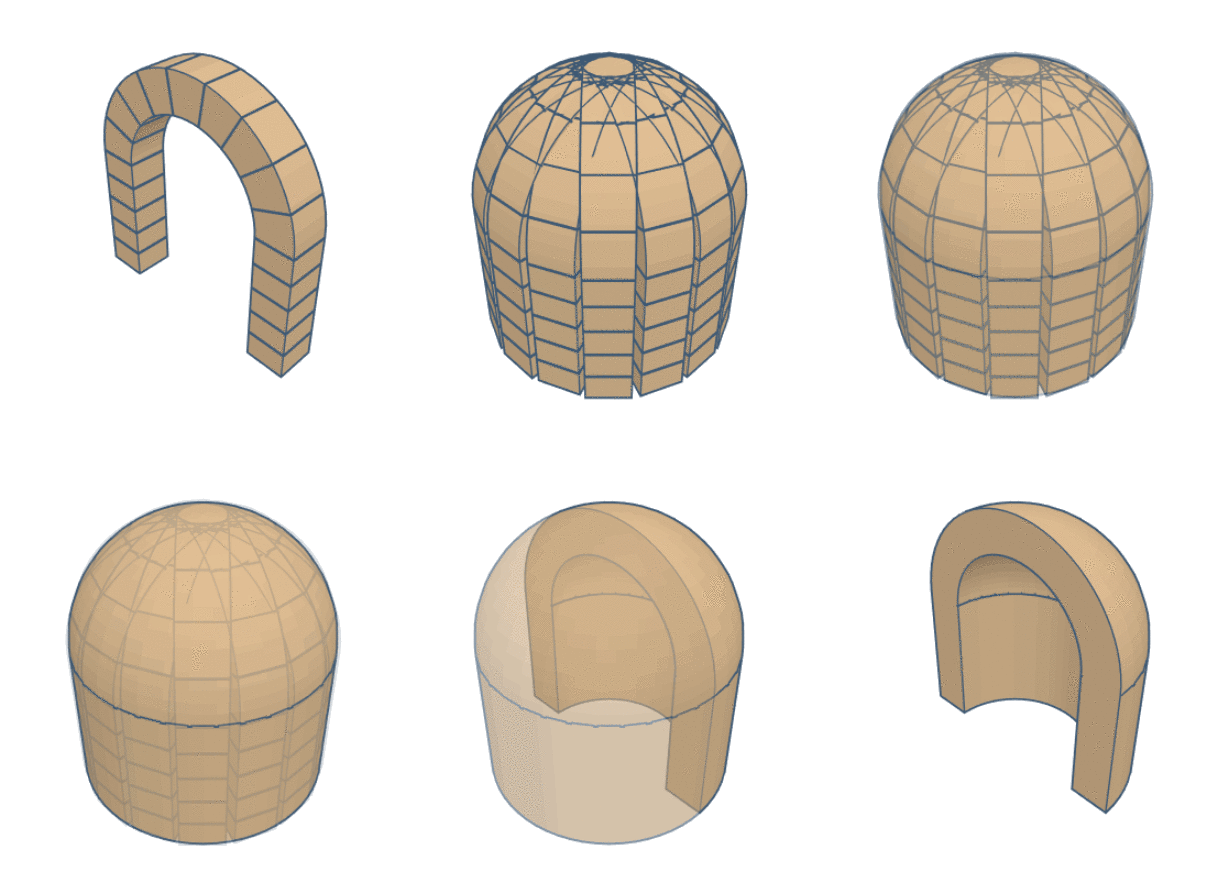
The last of the three elements, the dome, is made of several arches that have been placed around a circumference, as shown in the gif:
(Original images)
It is an element that leaves a large space inside the building, and for that reason they’ve been used for centuries in the construction of impresive buildings such as temples and churches. Two of the best known domes are that of the Pantheon in Rome (image on the right), built in the 2nd century, and the dome of St. Peter’s Basilica (image on the left), built between the 14th and 15th centuries, which was designed by the famous sculptor, painter and architect Michelangelo.
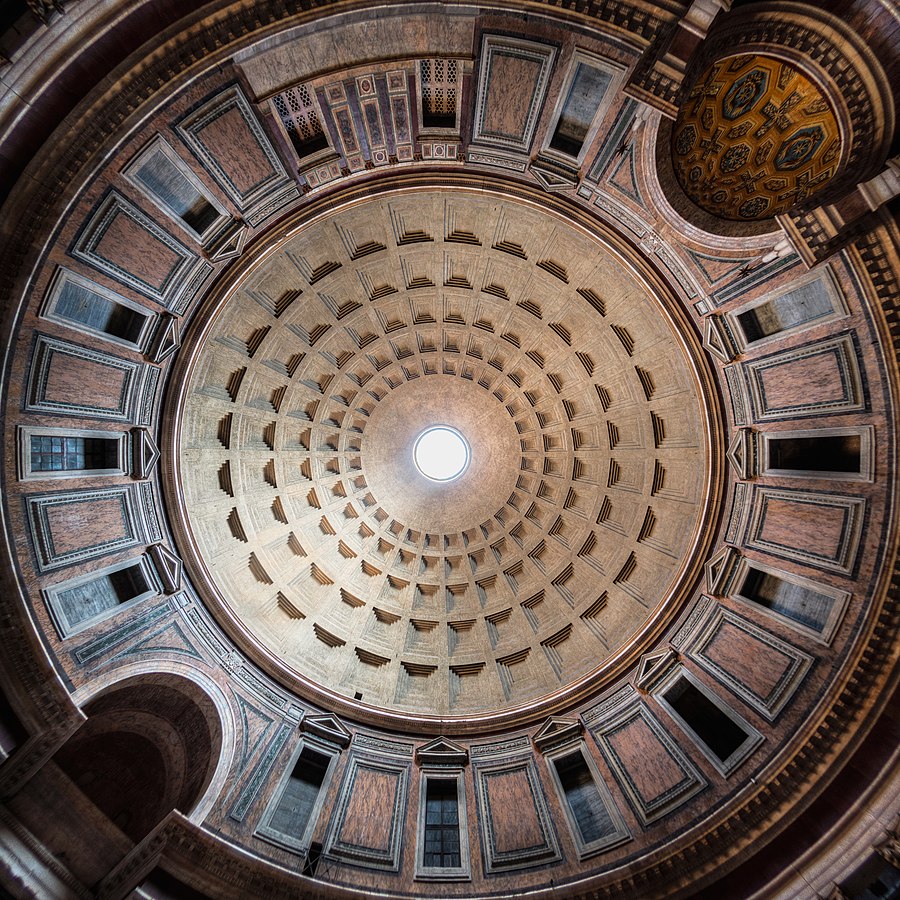
(Mohammad Reza Domiri Ganji, CC BY-SA 4.0, via Wikimedia Commons)

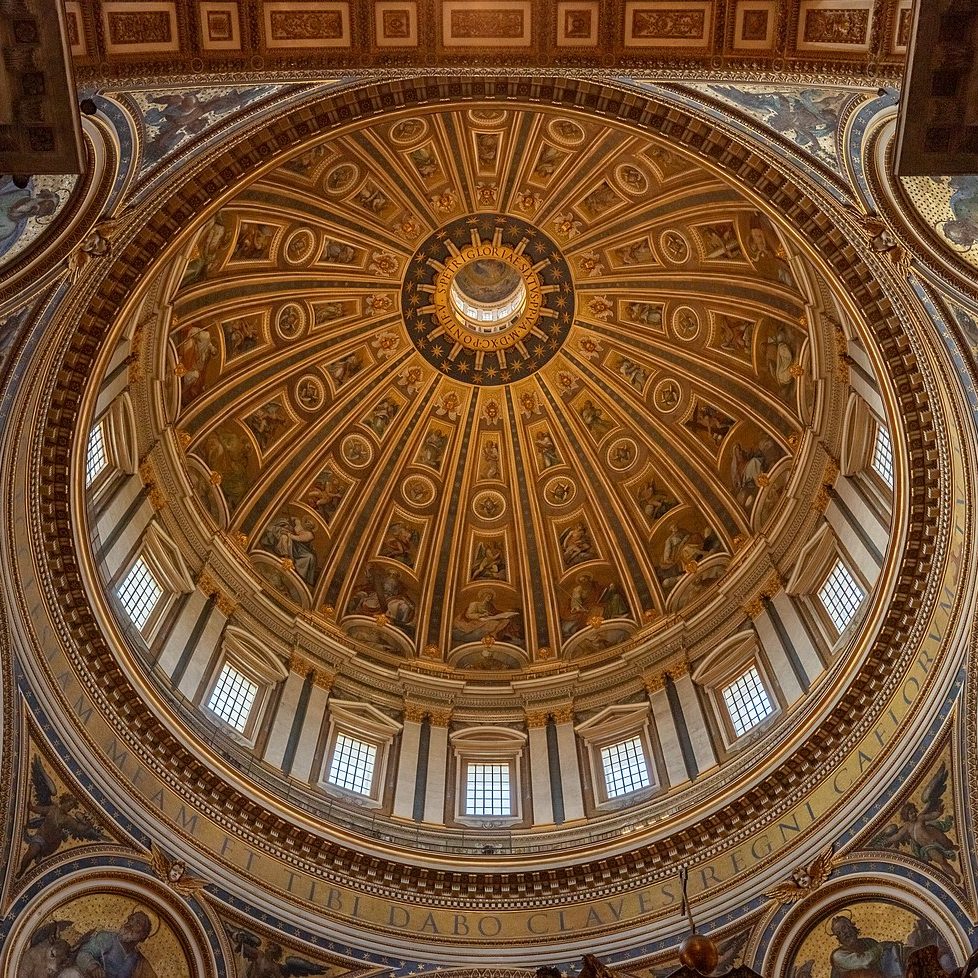
(Diego Delso, CC BY-SA 4.0, via Wikimedia Commons)