Lesson 2:

What is a force? And a load?
Before we’ve seen that any structure must resist the forces that act on it. But what is exactly a force? Is a force the same as a load?
Let’s start understanding what a force is. Although we are very used to using that word in our daily lives, I would dare to say that it would be very difficult for you to give a definition of what a force is. Well, this is a very good definition:
A force is any action that can modify the speed of a body or change its shape.
There are three situations in which a force is acting on a body:
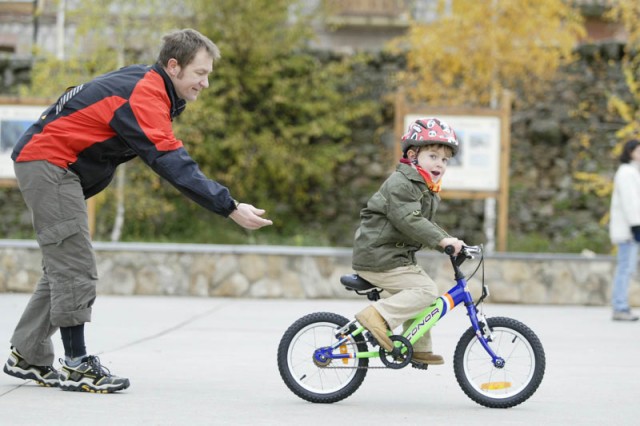
- When a body that moves increases or decreases its speed. For example, if we push a child riding a bicycle we are applying a force on him. If we press the brake pedal of a car we are also exerting a force, in this case to reduce its speed.

- A particular case of the above occurs when a body that was resting (none speed) begins to move, or vice versa, when an object that was moving ends up stopping. When a football player shoots a penalty, he is exerting a force that will make the ball move. On the other hand, when a goalkeeper catches a ball he is also exerting a force on the ball so that its speed reduces to zero.


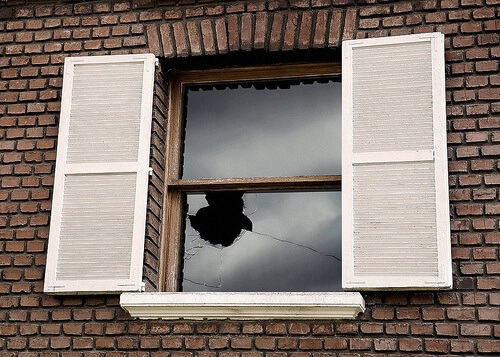
- Finally, when a body is deformed it is also due to a force. This happens, for example, when we crush a can, when a window that has received a blow breaks or when we fold a sheet of paper:


In the Mechanisms unit, we will go deeper into the concept of force and specifically a very particular type of force: the weight.
Now we already know what a force is, we just need to know what a load is: a load is a force that acts on a structure.
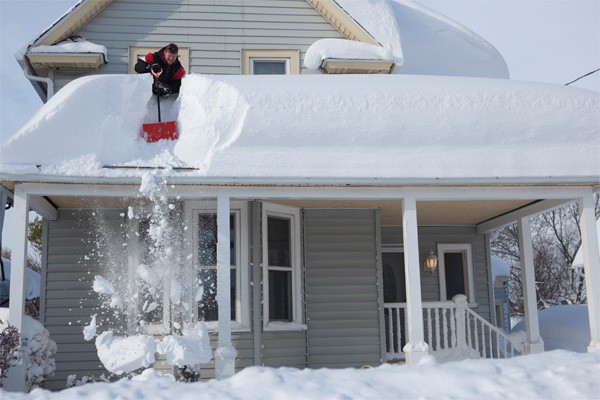
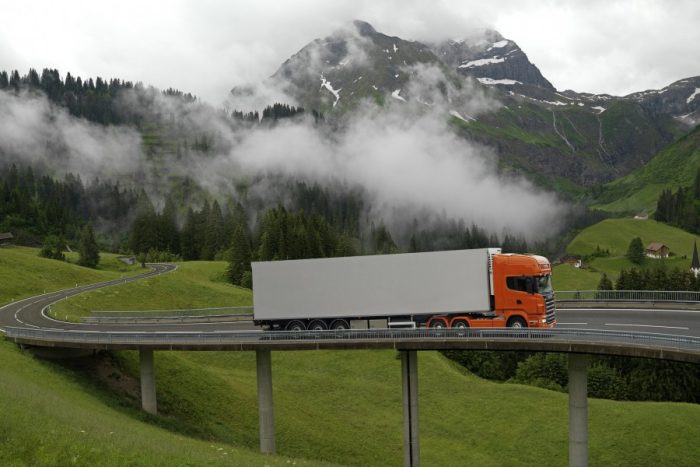
It’s that simple, any force that affects a structure is a called a load. For example, the wind that hits a high-voltage tower is a load, and so is the snow that accumulates on the roof of a building, the weight of a truck going over a bridge or the force of the waves of the sea that hit the walls of a port.
Types of loads.
We’ve seen some examples of loads that act on different structures. Now we’ll classify them into two big categories:
Static loads.
Are those that do not vary over time or that vary very little. In other words, these are the loads that are usually acting on a certain structure.
For example, the cars moving over a bridge are an example of a static load. It is true that cars move, and that sometimes there will be more vehicles than others. However, those changes are not very important.
Therefore, the main characteristic of this type of load is that they are easily predictable. When designing a bridge, it is easy to calculate approximately how many vehicles will be crossing it at every moment. Maybe around 10 vehicles are usually passing through the bridge while 100 vehicles pass over the bridge at rush hour. But we know, for sure, that there will never be thousands or millions of cars on the bridge, simply because there wouldn’t be enough space for so many cars.
Static loads are divided into two categories:
- Dead loads: are the loads due to the structure’s own weight. Keep in mind that when building, for example, a block of flats, the first force that the structure must be able to withstand is its own weight. The weight of the beams, pillars… and any other element of a structure is in many cases the biggest load that it must be prepared to withstand.
- Live loads: are the loads that move (are not static). The most common are, in the case of buildings, the weight of the people that enter and leave, and in the case of bridges the weight of the vehicles that pass over them.
However, there are many more examples of live loads. For example, a dam must be prepared for water rises that occur every year when the snow melts on the mountain tops. These increases in water flow are something that happens every year and they are easily predictable, although there may be small variations in intensity from one year to another. Just the same, normal rainfall and moderate winds are also frequent phenomena that are considered live loads.


(Vehicles on a bridge, original image)
Dynamic loads.
These are loads that appear from time to time, randomly and for a short period of time. In addition, unlike static loads, they are practically unpredictable. Some examples are:
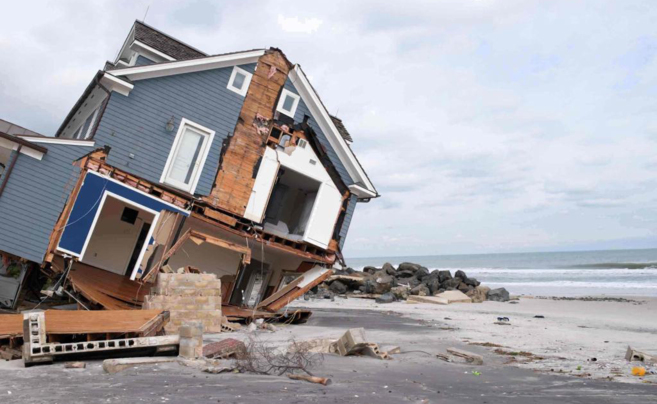
- Strong gusts of wind, earthquakes or hurricanes.
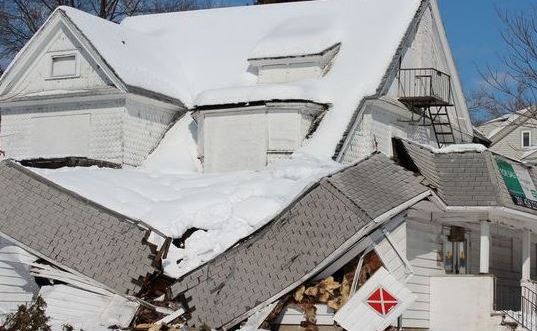
- Heavy snowfalls.
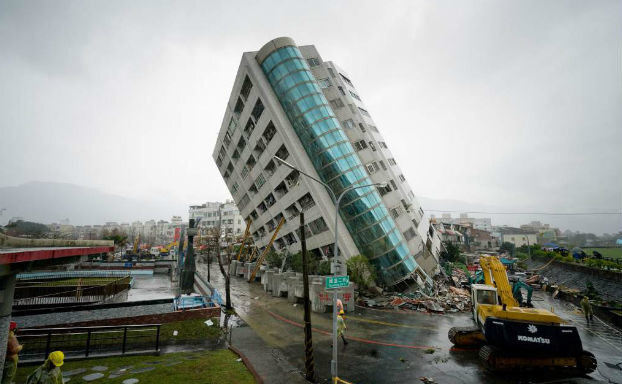
- Earthquakes.
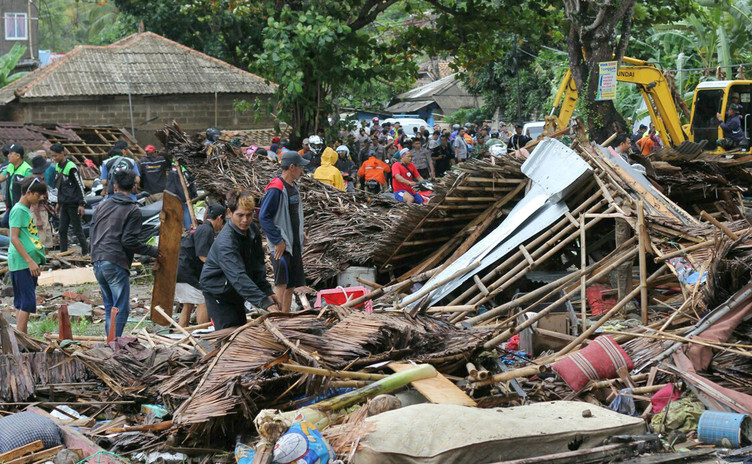
- Tsunamis.
Depending on the location of a structure, the necessary precautions to resist this type of load must be taken. For example, in an area where there’s no risk of earthquakes, it will not be necessary to construct buildings that are resistant to these type of phenomena or in an inland area the danger of tsunamis is non-existant.
However, in areas with a specific risk it is essential to take these types of loads into account during the design process. This way, accidents such as the ones in the images can be avoided: a house destroyed due to a hurricane, a collapased roof due to a heavy snowfall, a building toppled by an earthquake and a town devastated by a tsunami:
The following video explains one of the most used techniques for the construction of earthquake-resistant buildings. The solution consists of isolating the base of the buildings by seating the columns on elastic pieces called seismic isolators (made of rubber or neoprene) that are able to absorb the vibrations of the ground when during an earthquake:
And in this video you can see how the base isolation system are installed in a real building:
*Exercises 3 and 4.