Lesson 3:

Types of structures.
Massive structures.
These are large, very heavy and solid structures, that require a lot of material for their construction. This type of structures withstand the forces that act on them thanks to their own weight. There are multiple examples of massive structures from ancient times. Below you can see two of them
- The Egyptian pyramids, built around 2700 BC. as tombs for the pharaohs Khufu, Khafren and Menkaure. The highest one, the pyramid of Khufu (also known as the great pyramid of Giza), measures 146 meters high (to give you an idea, a soccer field is about 100 meters long).
- The walls of Ávila, built between the 11th and 12th centuries as a defensive fortress.

(Ricardo Liberato, CC BY-SA 2.0, Wikimedia Commons)

(City Walls of Ávila, Spain, original image)
Another typical example of a massive structure are walls built by stacking material, mainly rocks (which may or may not be glued) and concrete. In the images below you can see a stone wall (left image) built in order to limit land and on the right a retaining wall. We call retaining wall to those whose purpose is to prevent soil from sliding.
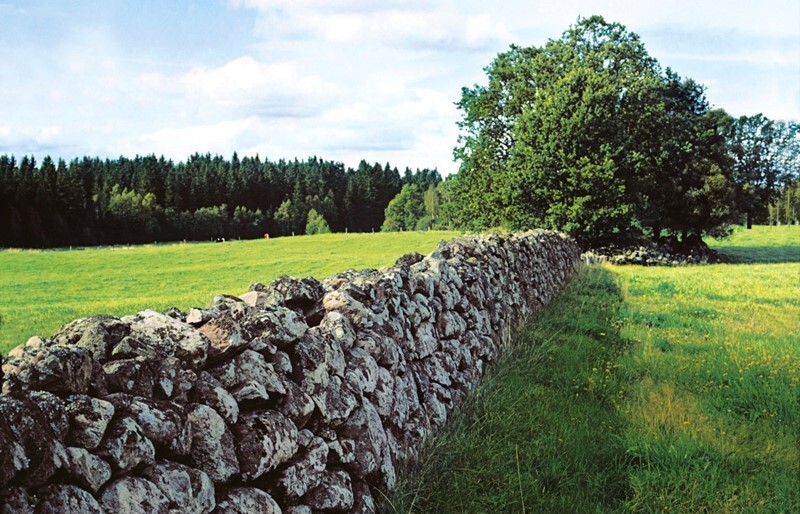
(Stone wall, Ikea)

(Retaining wall, original image)
Finally, another of the areas in which massive structures are common is in hydraulic constructions, that is, those that aim to control a volume of water. Two examples of it are:
- Dams: these are structures built in the riverbed in order to accumulate a certain volume of water, either to generate electricity, to guarantee the supply in times of drought or even to avoid sudden floods that can cause damage to nearby populations. In the image below you can see one of the best known dams in the world, the Hoover Dam, which is located on the Colorado River (United States):
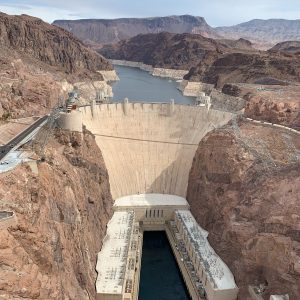
(Hoover Dam, Andy Chen, Pexels)
- Levees: are a special type of dam built into the sea in order to control the water level and thus prevent flooding on the coast. The best known example of levee construction is that of the Netherlands. This is a country that for a long time has suffered floods from the north sea in an important part of its territory. The reason is that the Netherlands are located on a very low area and therefore is greatly affected by increases in the sea level.
Already during the Middle Ages, small walls began to be built in the Netherlands to reduce flooding and increase farmland, but these were small works that were not enough to withstand the great rises in sea level.
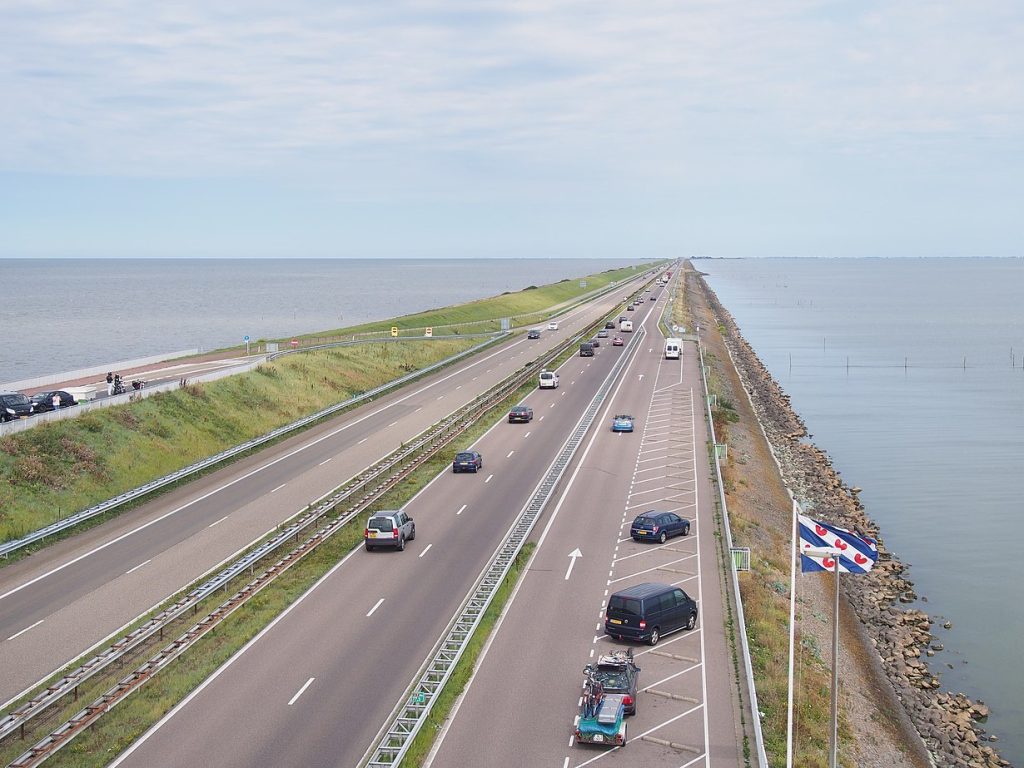
However, 100 years ago (image on the right), the country started one of the most spectacular constructions in recent times. The construction of a dike: the Afsluitdijk, which would allow to regulate the level of the sea. This levee changed the lives of its inhabitants forever, since their crops and possessions would never again be endangered by this kind of natural phenomena.
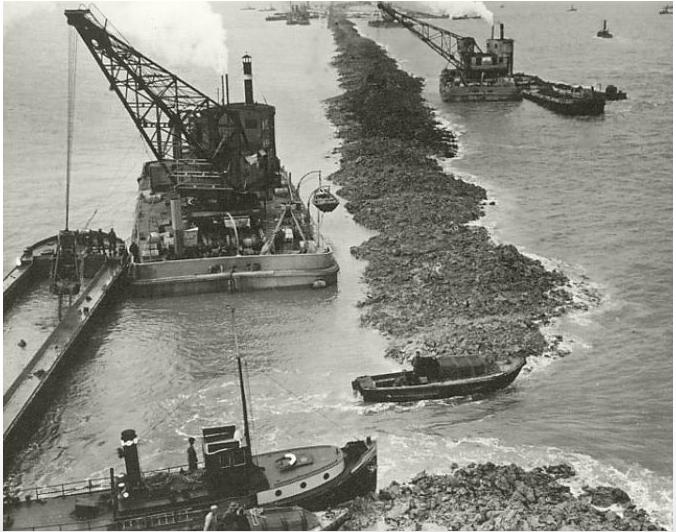
(Afsluitdijk, Public domain, Wikimedia Commons)
The Afsluitdijk is a large 32km long wall that crosses the North Sea (see location) and has locks that allow to rise and lower water level by regulating how much water enters and leaves. In the image on the right you can see how the sea level to the left of the dam is higher than to the right. This way, the coast of the Netherlands is safe from the tides that would otherwise flood much of the territory.
In addition, this work allows to connect by road two provinces of the country that, otherwise, would not be communicated. This great structure, which took 13 years to complete, and other similar ones, have allowed that nowadays, around 25% of the country’s surface is land below sea level.
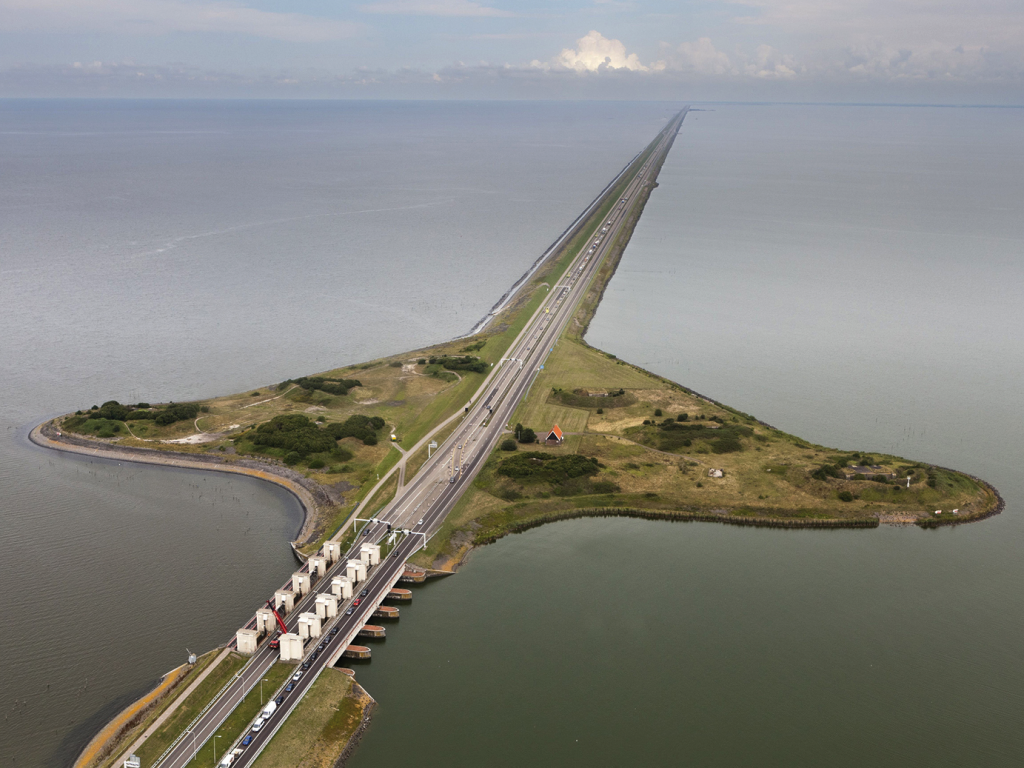
(Afsluitdijk, Bardloos, Imgur)
(C messier, CC BY-SA 4.0, via Wikimedia Commons)
Thanks to this dike, the Netherlands is today a rich country, in part due to the development of agriculture and is especially famous for its extensive fields of tulips that are exported all over the world:
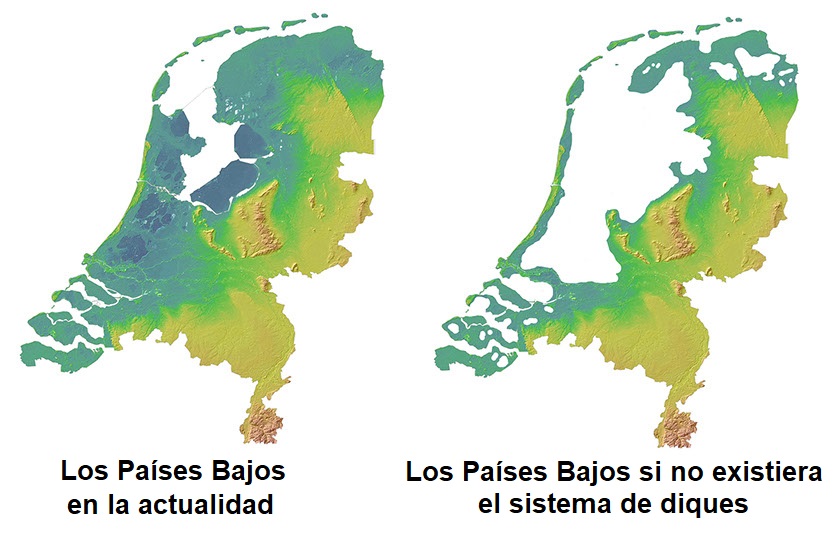
(Nehterlands – polders, fundacionaquae.com)

(Tulips fields in the netherlands, smartresize)