Lesson 3:

Why are some electric currents more dangerous than others?
You probably already know that some electrical currents can be very dangerous. In fact, that is the reason why it is important to insulate the wires that are going to conduct electricity. You will also probably know that some electrical installations or electrical appliances are much more dangerous than others.
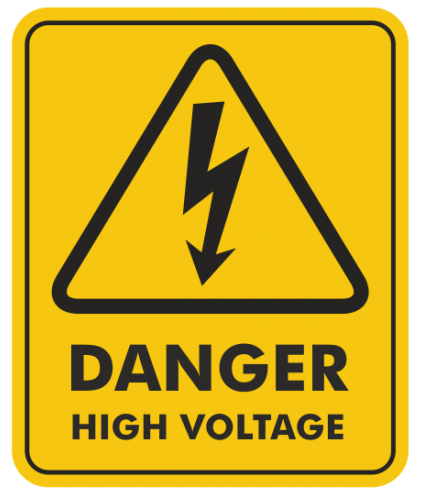
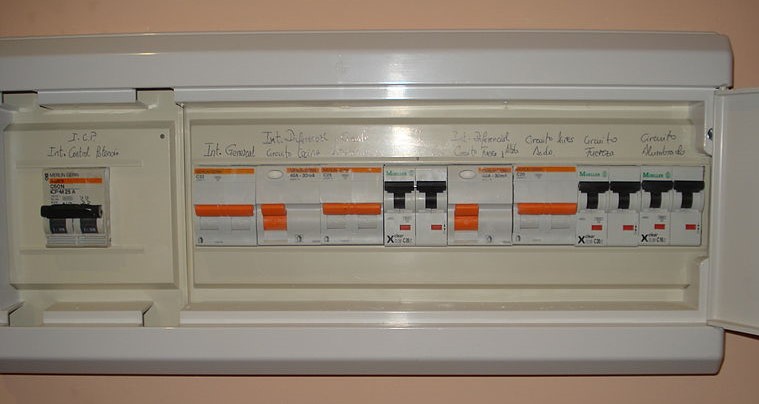
For example, no one is afraid to change the batteries in the TV remote control. However, if it is necessary to change the bulb of a lamp, the first step we must take is to disconnect the house’s electrical installation from the electrical panel (the one that is usually found at the entrance of the house) and it is highly recommended to wear insulating gloves:
It is also important to mention the workers who are responsible for installing and maintaining the transmission towers that carry electricity long distances. In this case, very specific training is required, since any slight mistake when handling those currents can be catastrophic. The video below gives you an idea of how complex it is to carry out one of these jobs:
But, going back to the first question, what makes one current different from another one? Next, we’ll see that there are two characteristics that can make an electric current dangerous or not.
Electrical intensity.
We have already seen that an electric current is just a large number of electrons that move in the same direction through a conductor material. Therefore, the more electrons that circulate the greater the electric current will be.
We call electrical intensity the amount of electrons that flow in an electric current. The abbreviation for electrical intensity is the letter I.
Because the number of electrons that flow in an electric current is so big (millions of millions of millions) electrical intensity is not measured as the number of electrons but with a different unit: the ampere (also called amp). The abbreviation for ampere is the letter A. Therefore if we want to say that the intensity of an electric current is equal to three amperes we can write: I = 3A.
The more amperes an electric current has the more electrons it carries. One single ampere represents a huge number of electrons (more than 6 trillion electrons!!). The table below shows some typical values:
| Electric current | Electrical intensity | |
|---|---|---|
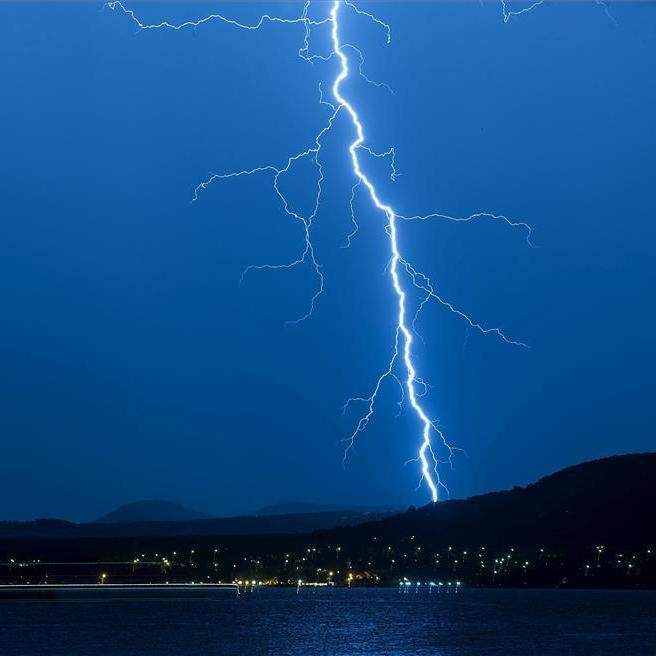 | Ray | 10.000 A |
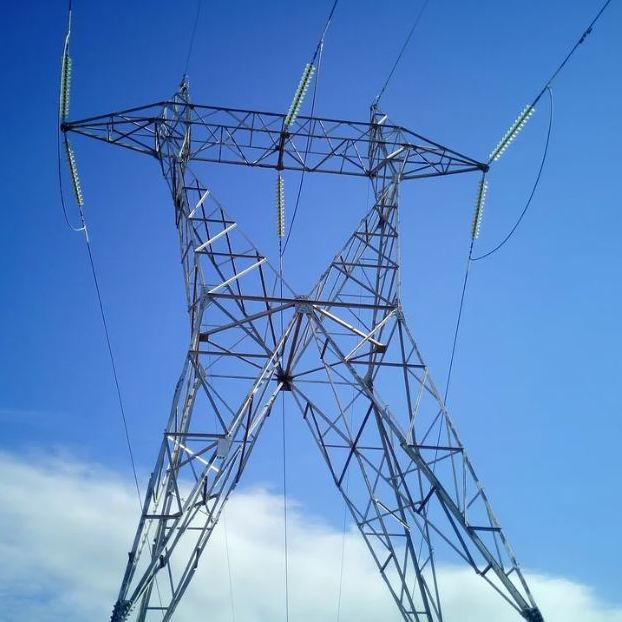 | Transmission tower | 300 A |
 | Home appliance | 1 to 6 A |
 | Smartphone | 0,02 A |
Voltage (or electric tension).
Apart from intensity, electric currents have another characteristic called voltage. The abbreviation for voltage is the letter V. Sometimes, instead of the word voltage, the term electric tension is used. You must know that in both cases we are talking about the same thing.
Voltage = electric tension
But, what is voltage?
We can say that the voltage is the energy of the electrons of an electric current. The higher the energy of the electrons the higher the voltage will be and vice versa.
Voltage is measured with a unit called volt, which is abbreviated with the letter V. So if we want to say that a current has a voltage of 5 volts we would have to write: V = 5V. Note that, in this case, the letter V of the abbreviation is the same both for the voltage and for the volt.
The table below shows some typical voltage values:
| Electric current | Voltage | |
|---|---|---|
| Ray | 100.000.000V |
| Transmission tower | 100.000 to 400.000V |
| Home appliance | 230V |
| Smartphone | 5V |
A trick to differentiate between intensity and voltage.
As we have seen before, intensity and voltage are two completely different characteristics that describe an electric current.
One electric current might have a low intensity and a high voltage, that is a small number of electrons but with a lot of energy; while another one might have a high intensity and a low voltage, that is a lot of electrons with not too much energy.
It is quite useful to compare electrical currents with water currents to better understand the different types of current that we can find:
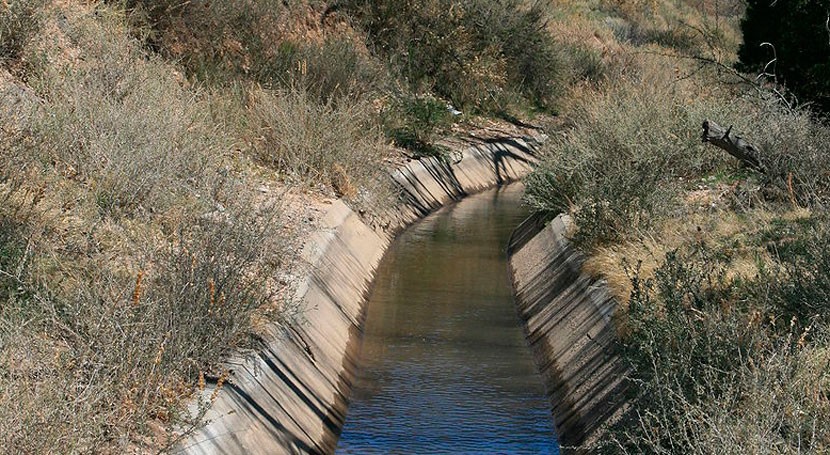
a) A small water canal like the one in the image usually carries a small amount of water that moves slowly (with low energy).
The equivalent electric current would have a low intensity and a low voltage.

b) A waterfall like the one in the image is created when a stream falls from a great height. In this case the amount of water falling is not much but it does with a great force and speed.
The equivalent electric current would have a low intensity and a high voltage.
In the image on the right you can see the Angel Falls which is the highest waterfall in the world and is located in Venezuela.
c) In its middle or lower course rivers usually carry a great volume of water, since they have collected the water from its tributaries, but it usually flows slowly
The equivalent electric current would have a high intensity and a low voltage.
To the right you can see the famous meander of the Colorado River, in the USA, known as the Horseshoe Bend.


d) In a huge waterfall like the one on the left, water coming from a river that carries a great volume of water falls from a great height.
The equivalent electric current would have a high intensity and a high voltage.
In the image you can see the Victoria Falls, on the border between Zambia and Zimbabwe.