Lesson 4:

How to represent a hole?
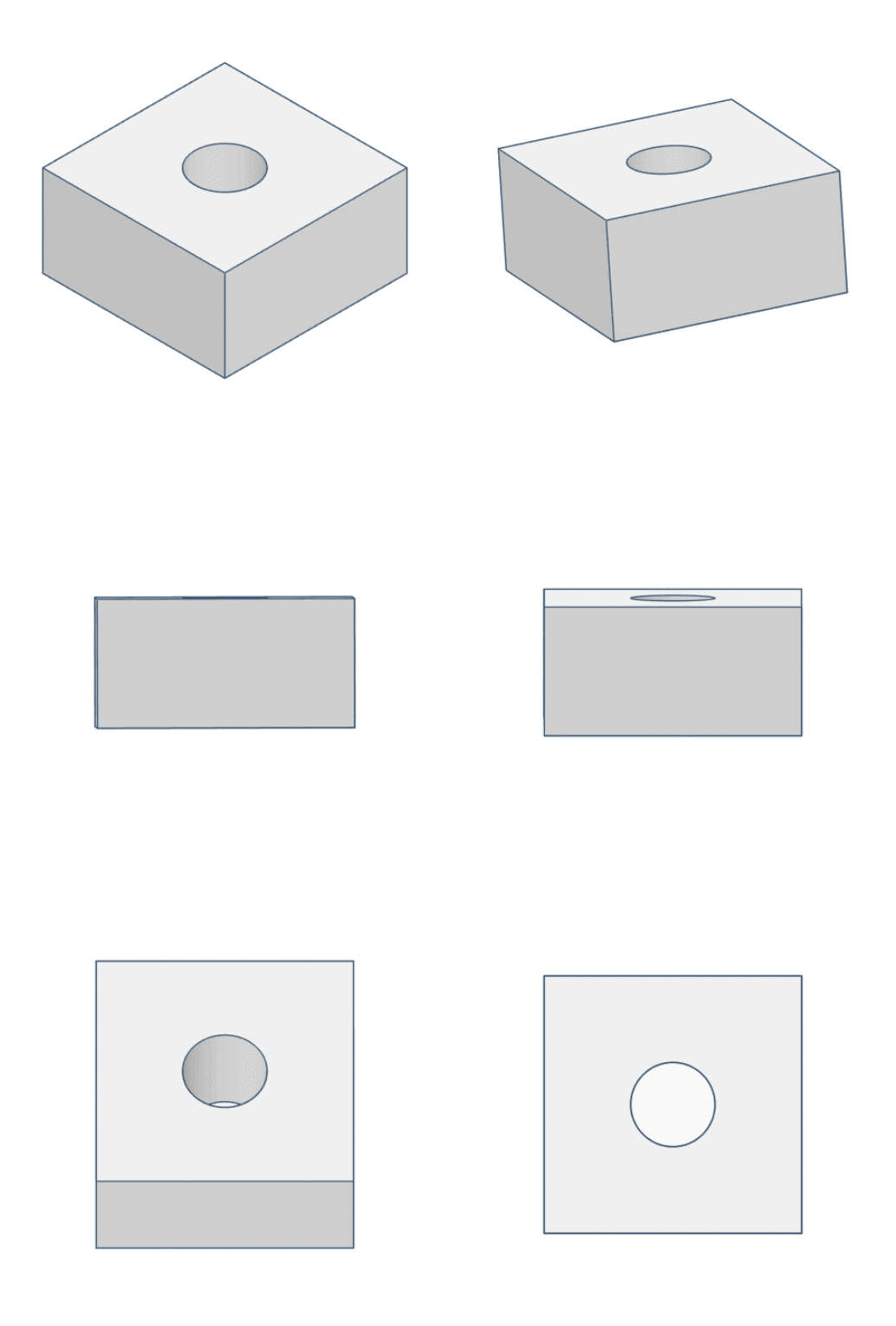
Being able to indicate the presence of a hole in a figure is one of the main difficulties when drawing the views of an object. Let’s start with an easy example: a prism with a circular through-hole (a hole that goes through the whole piece).
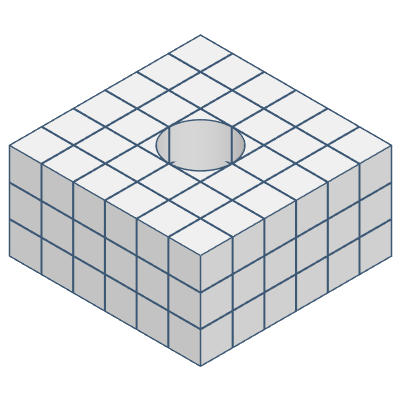
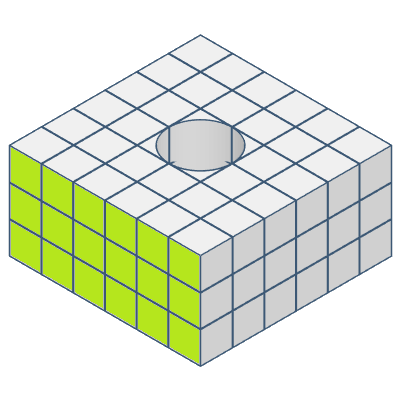
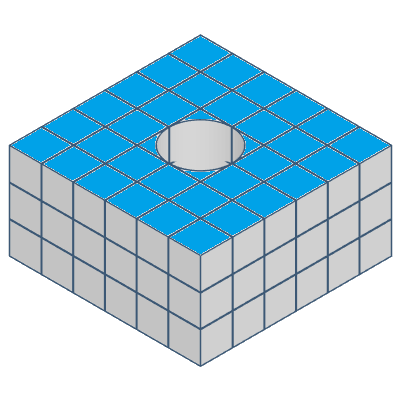
Below, the faces that can be seen from each of the views have been colored:
Front view
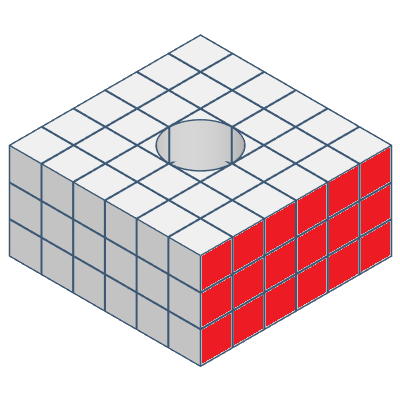
Side view
Top view
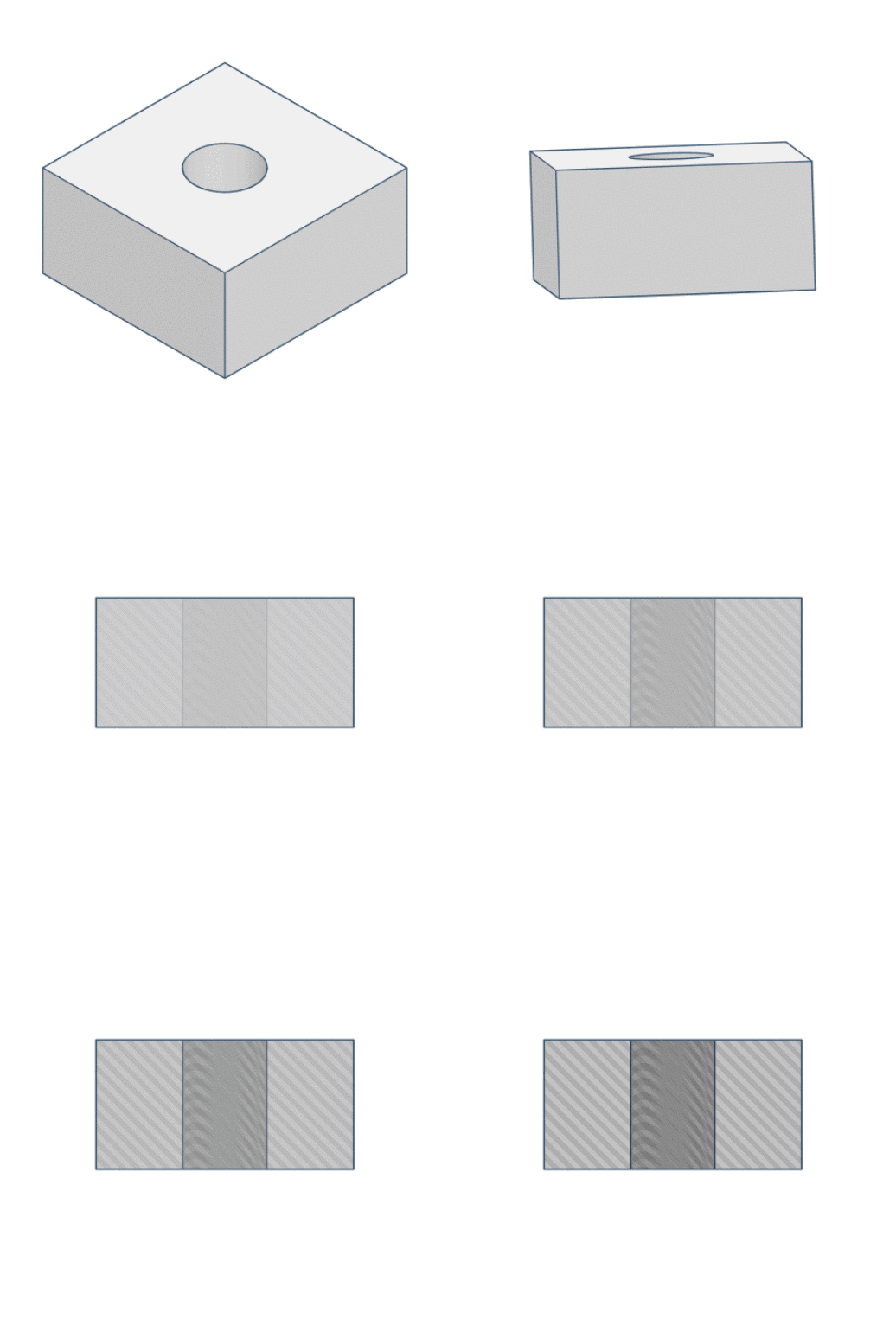
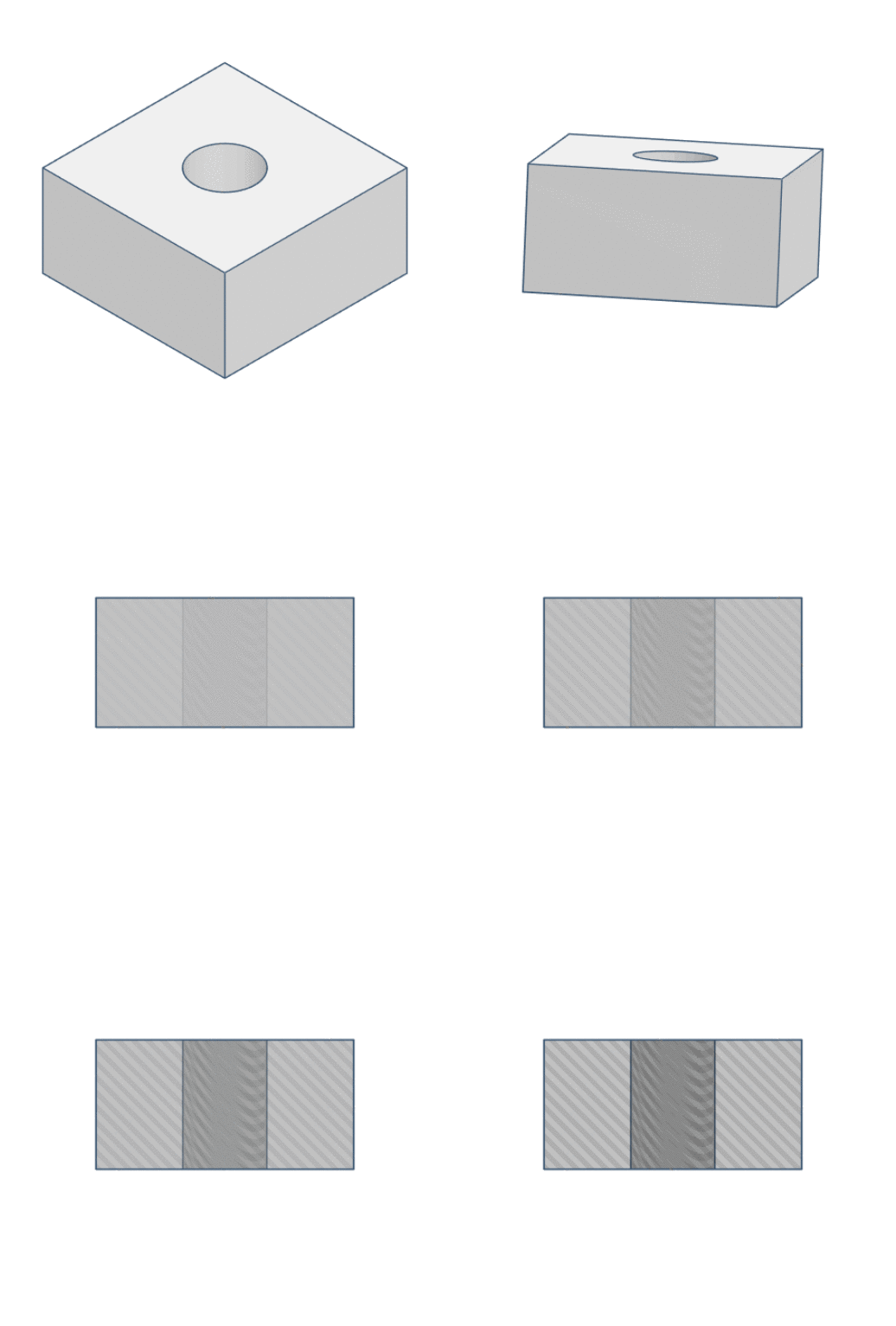
Realize that, in the front and side views of the gifs below the hole can’t be seen until the model is made transparent. However, when made transparent, the hole appears like a vertical cylinder: front and side views are rectangles and top view a circle.
Front view
Side view
Top view
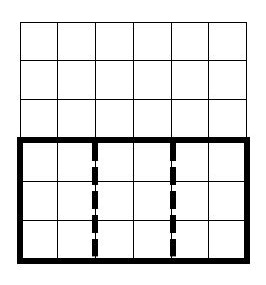
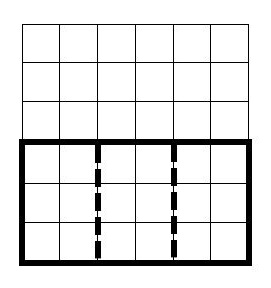
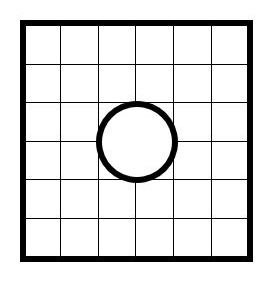
As represented above, those lines that can be seen when the object is made transparent must be drawn with a dotted line. This is the way to represent holes that are not directly visible from one view:
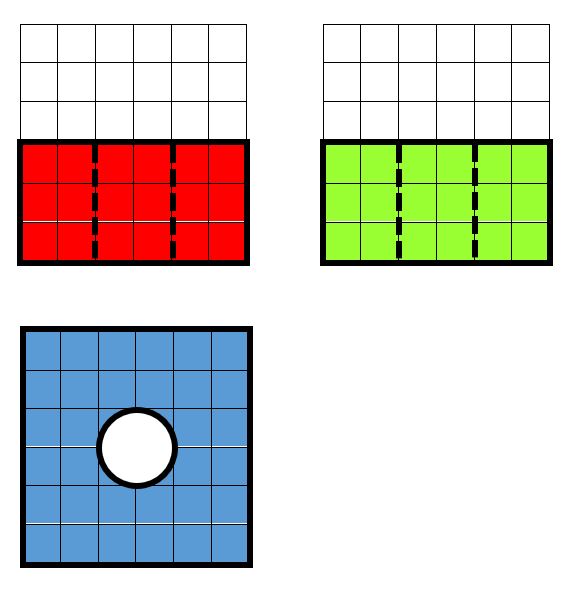
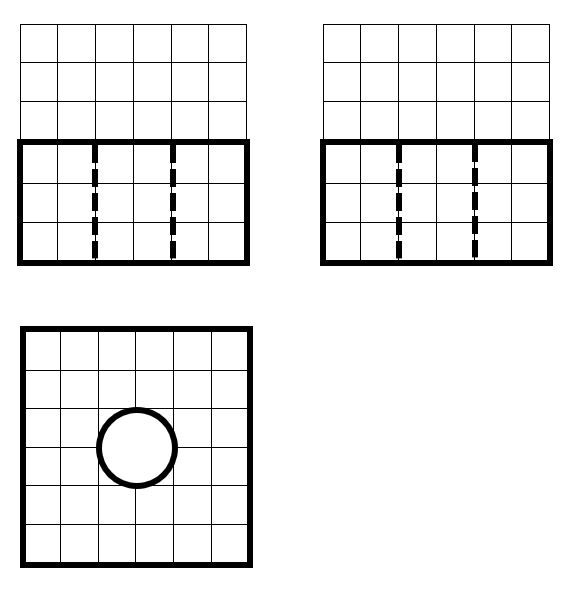
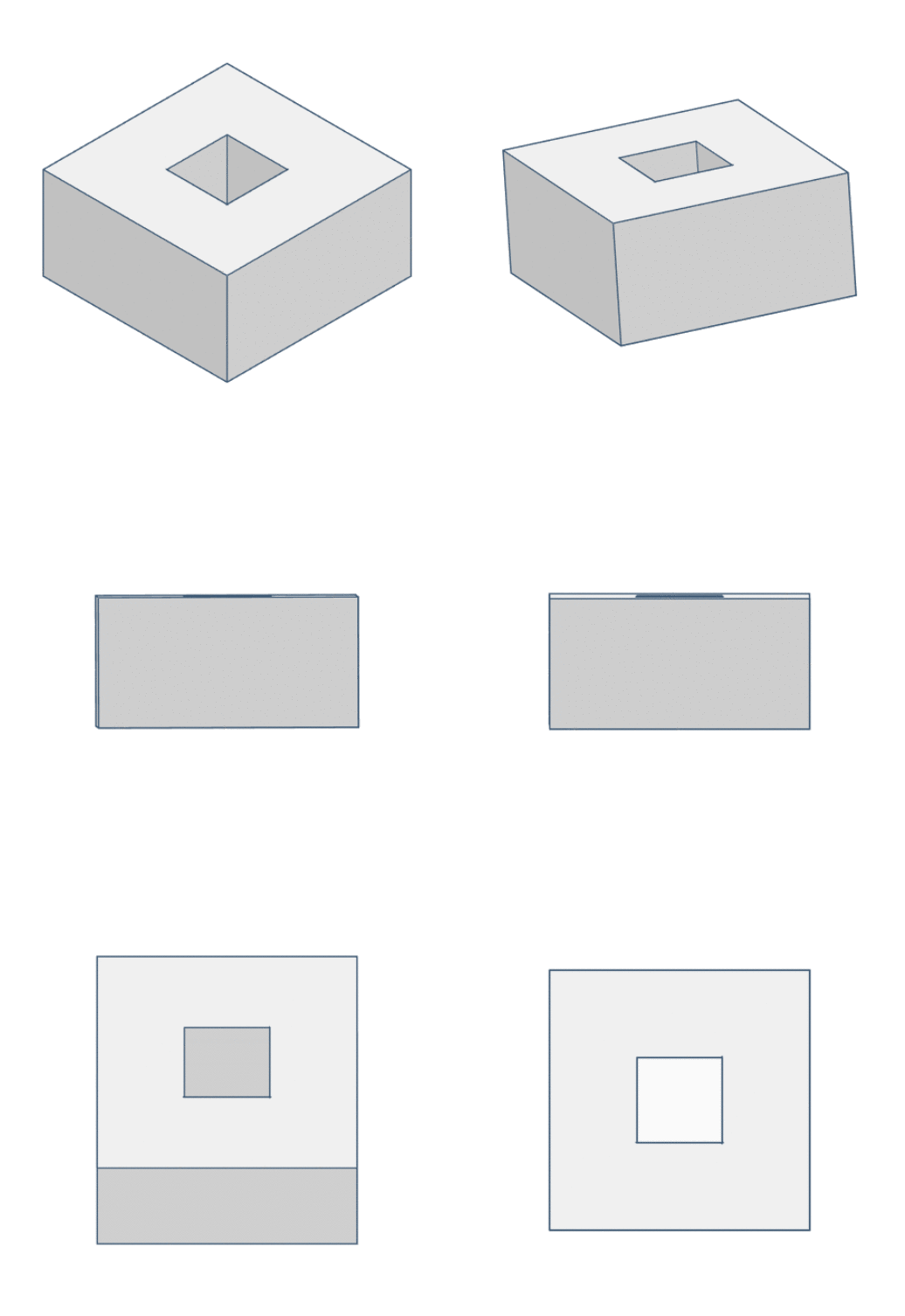
And, what do you think will happen if the hole of the previous figure was square instead of circular? There will be any difference when drawing its views?
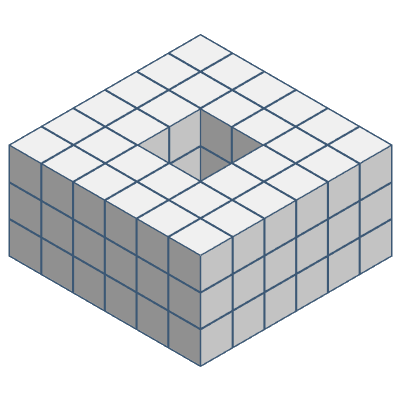
Below, the faces that can be seen from each of the views have been colored:
Front view
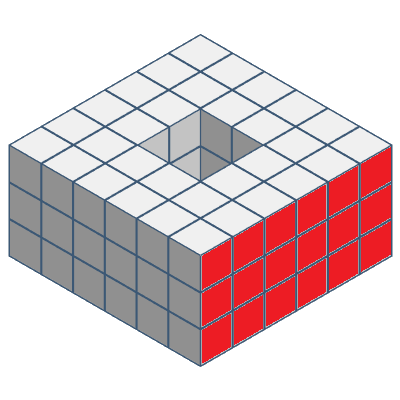
Side view
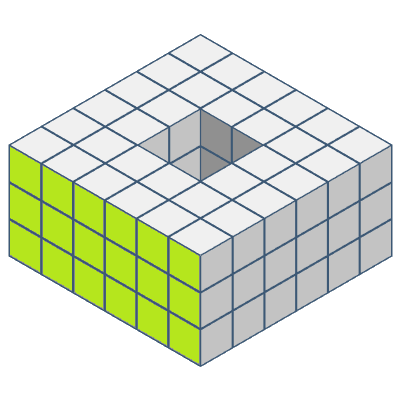
Top view
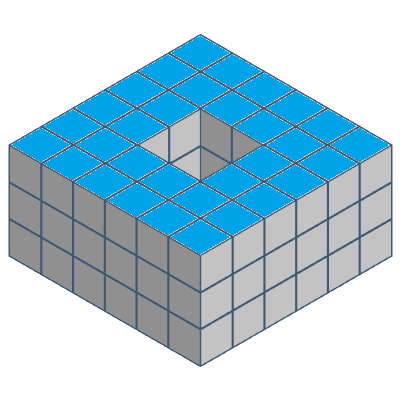
As you can see, the front and side views are exactly the same as in the previous figure. However, thanks to the top view we can realize that it is a square hole, what makes it different from the previous figure:
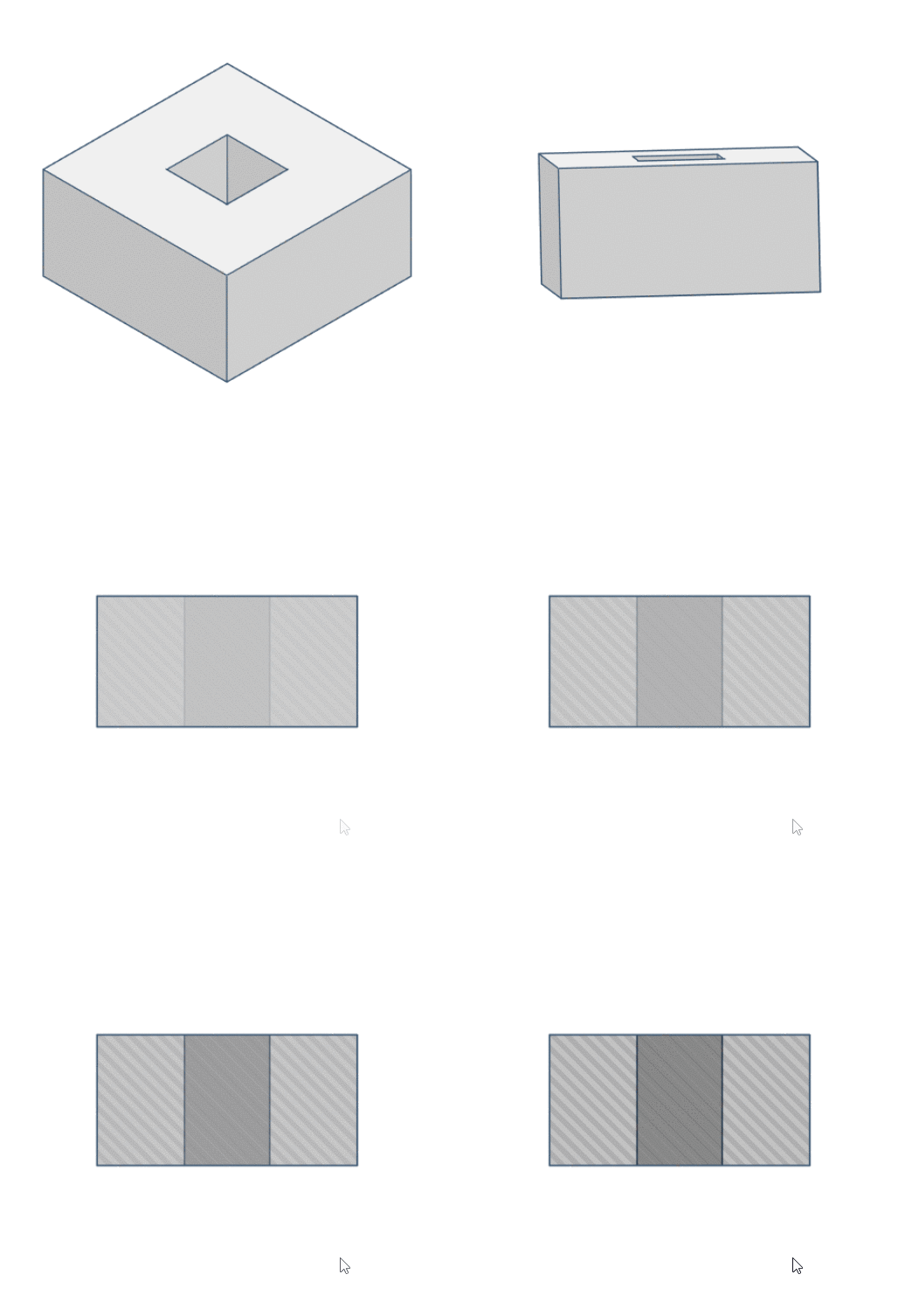
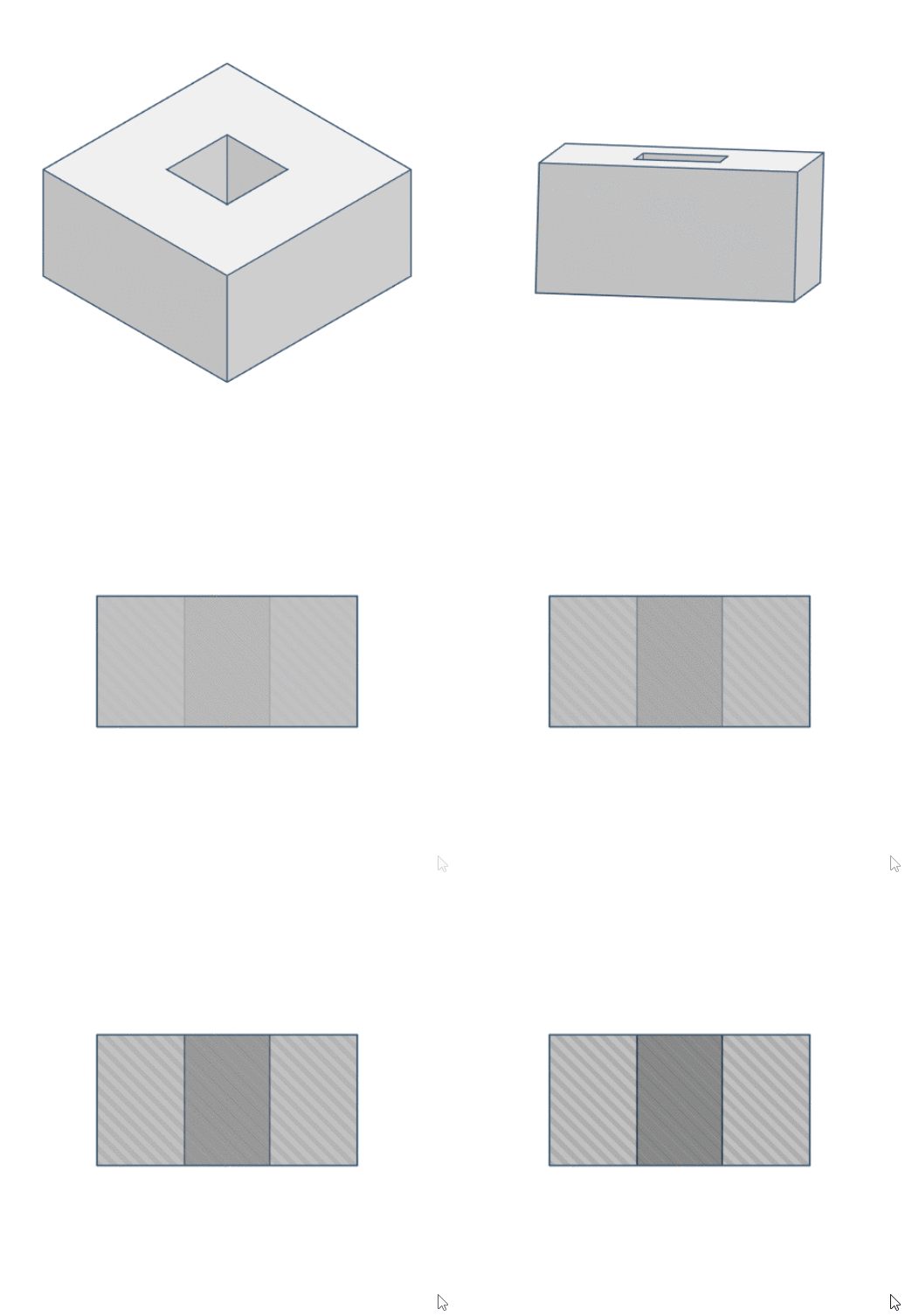
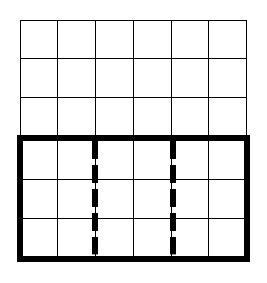
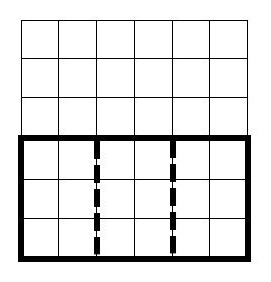
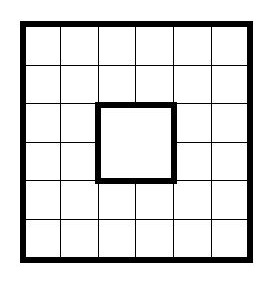
Again, the lines that are only visible when the model is made transparent are drawn with dotted lines:
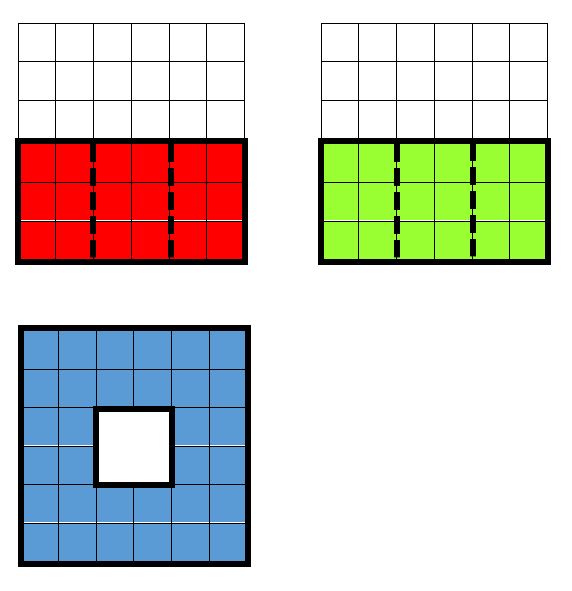
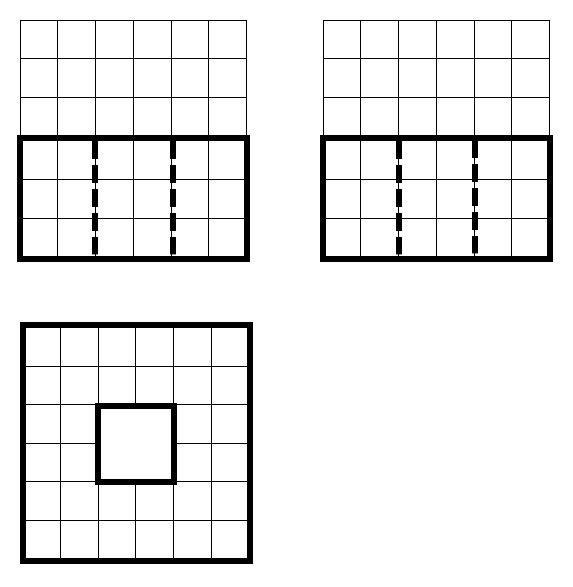
And a hidden face?
A hidden face is simply a face that is not visible from some of the views because of another part of the figure. For instance, in the model below, the face painted in black is not visible from the side view, therefore it is a hidden face:
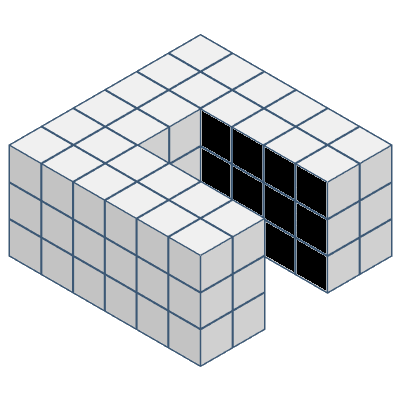
In fact, a hidden face is very similar to a hole that has reached one edge of the figure, that’s why they are also represented with dotted lines. Let’s see how to represent them:
Front view
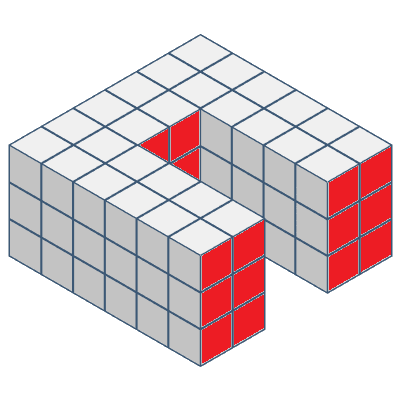
Side view
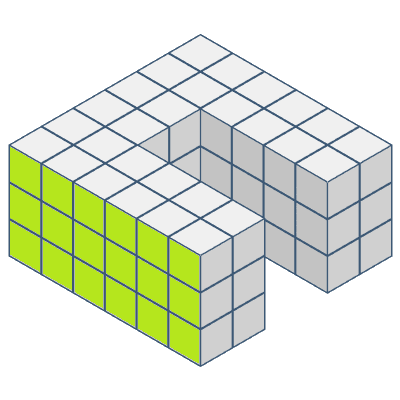
Top view
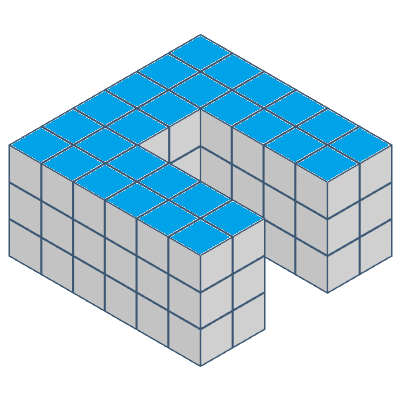
As you can see in the gif on the middle, when making the figure transparent a new line appears in the side view. That line is due to the hidden face and therefore must be drawn as a dotted line:
Front view
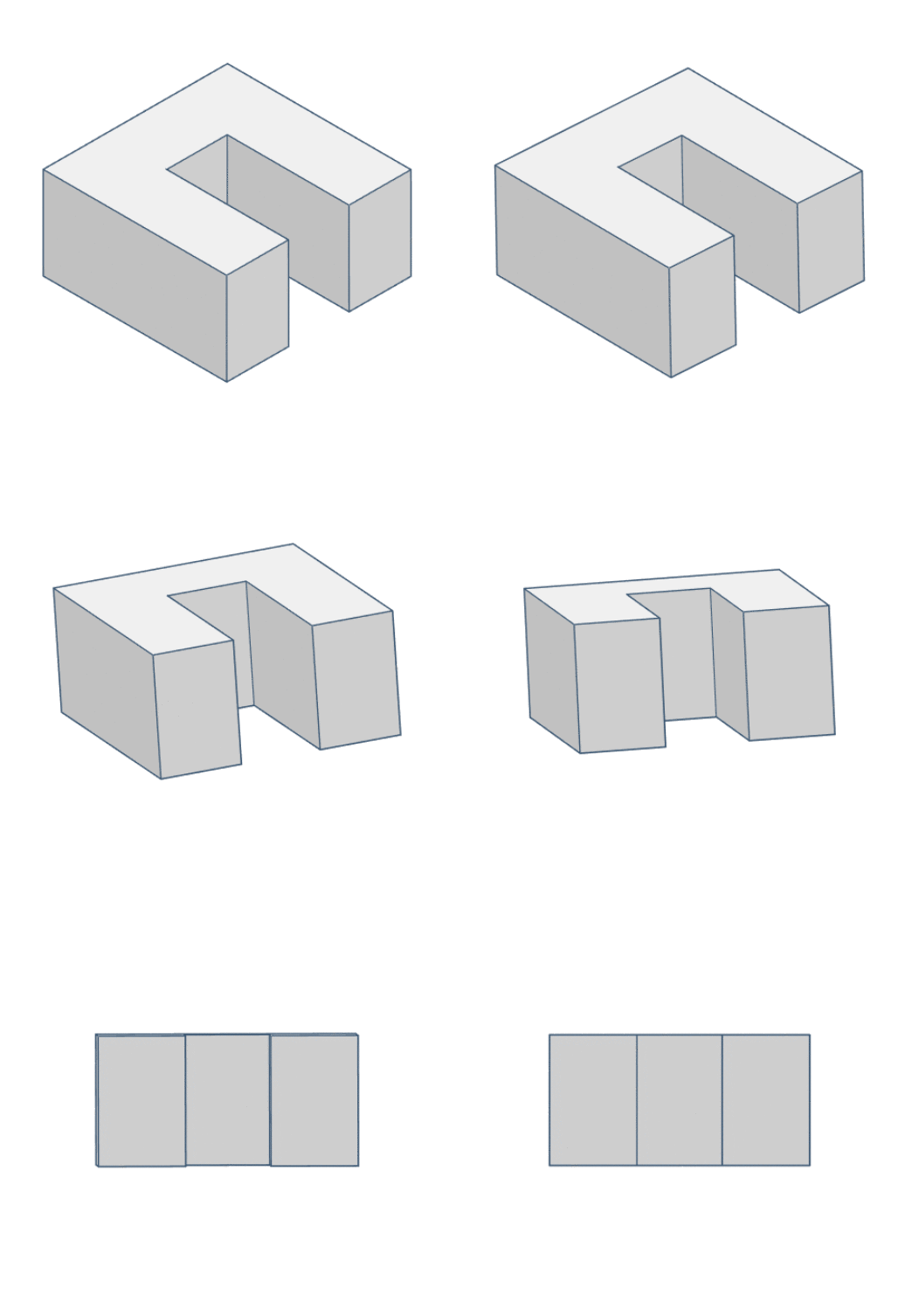
Side view
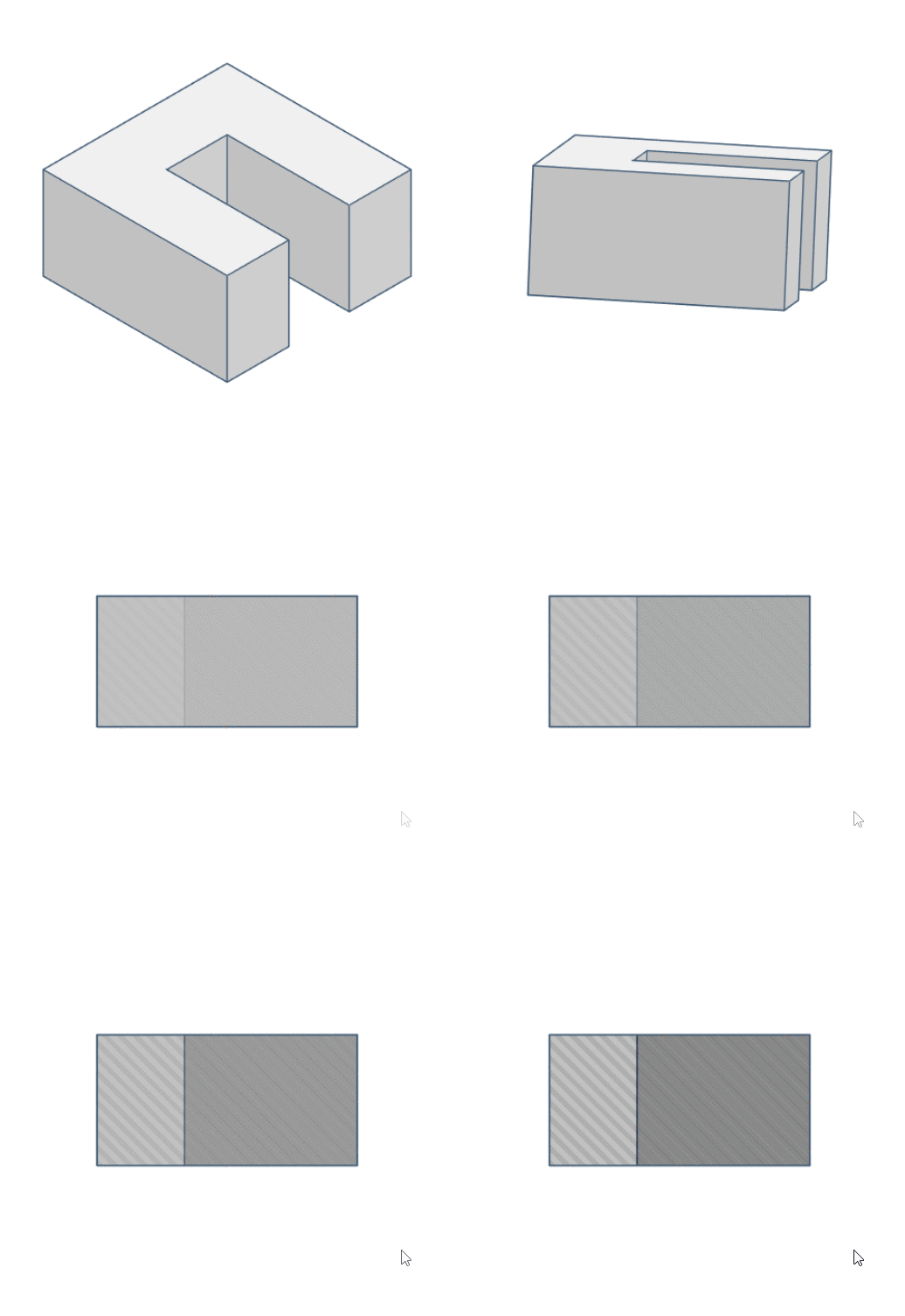
Top view
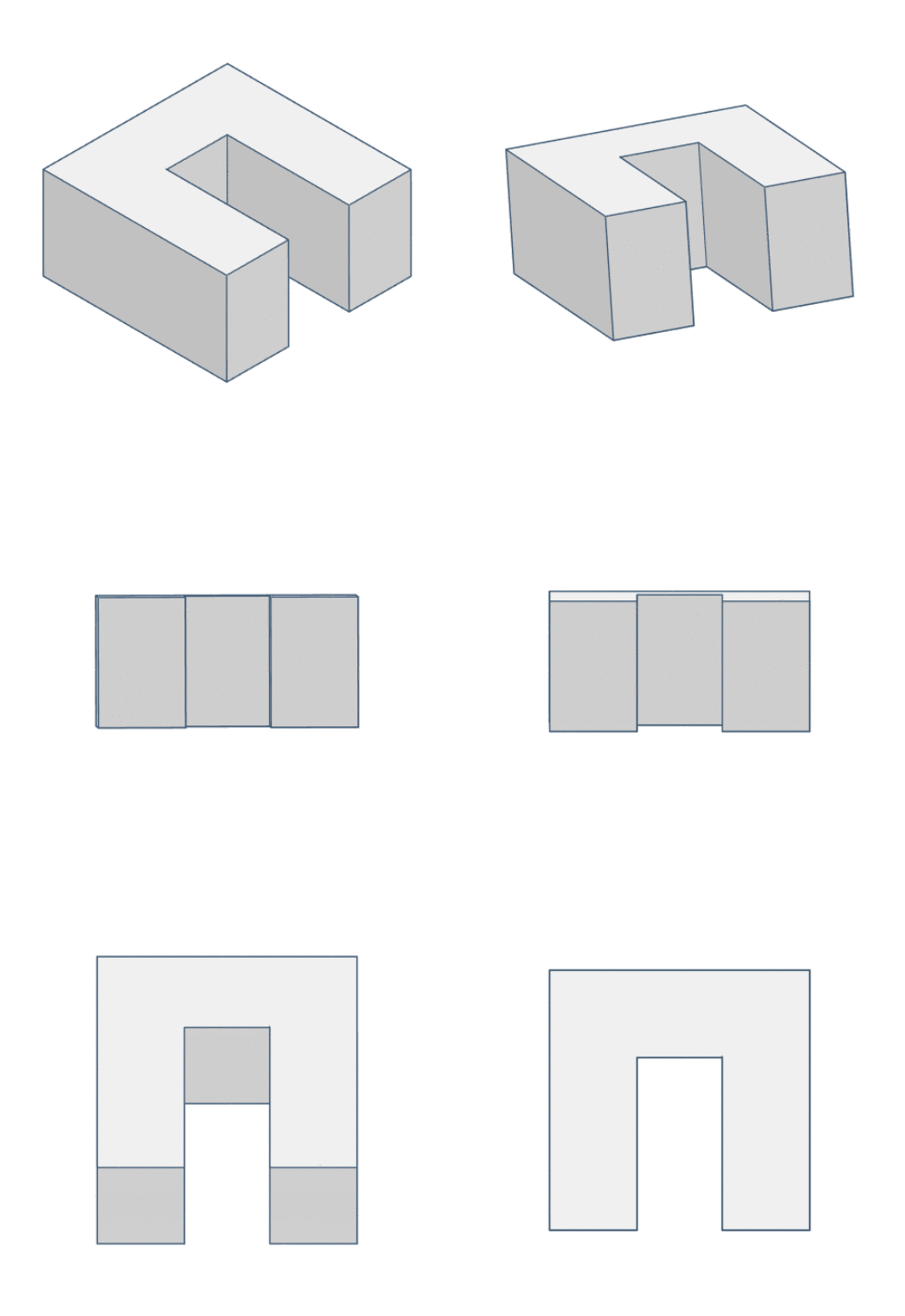
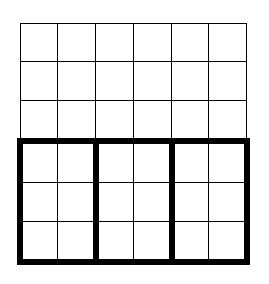
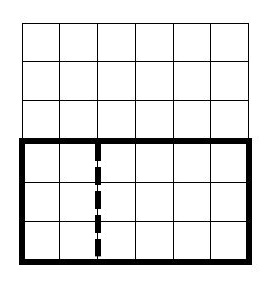
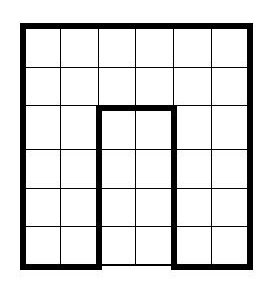
The view, correctly placed, are:
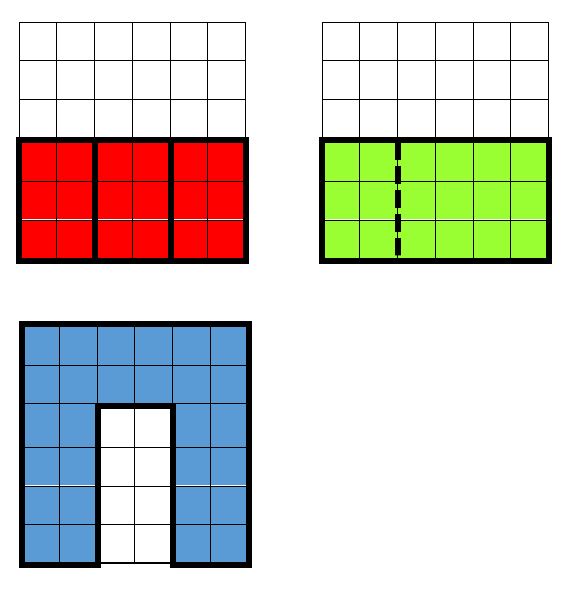
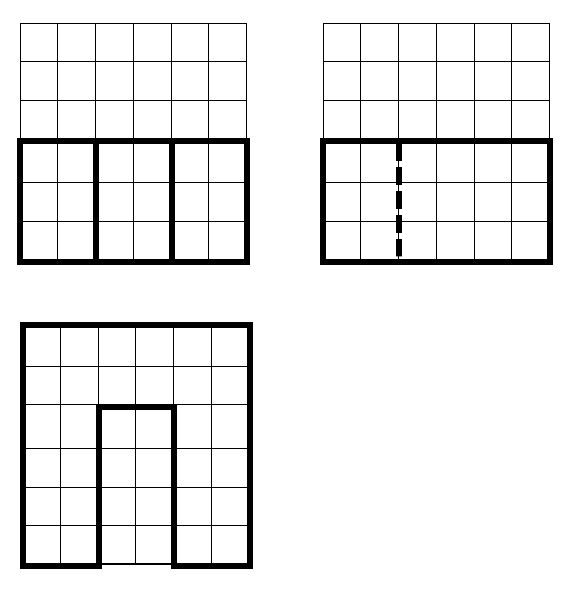
And now… all together!
Now you know how to represent:
- The main geometric shapes.
- Slanted faces.
- Holes.
- Hidden faces.
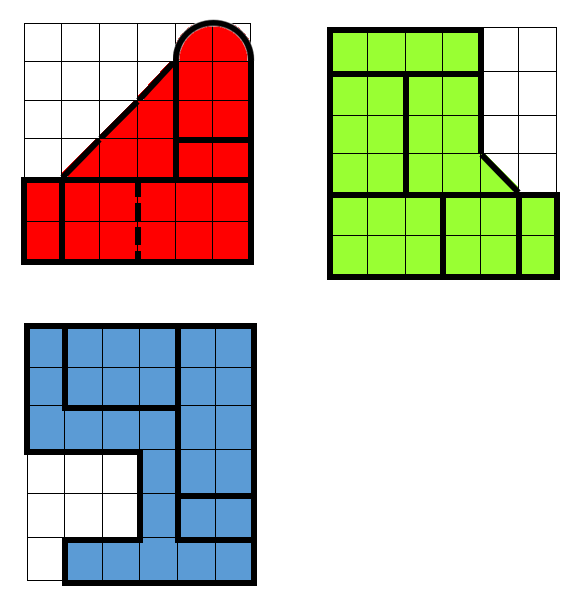
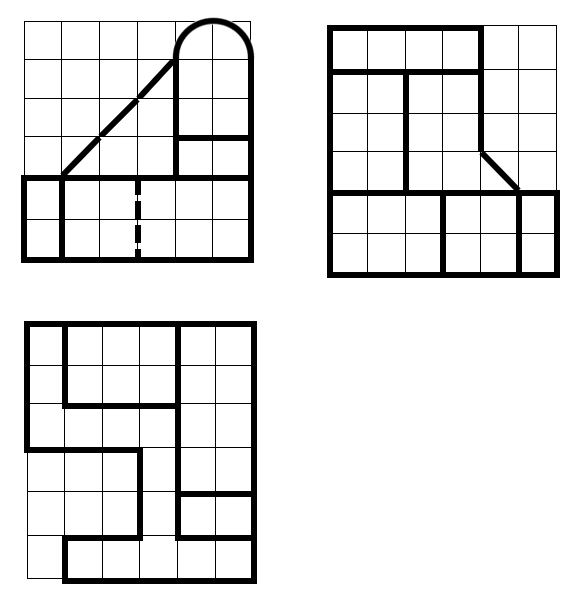
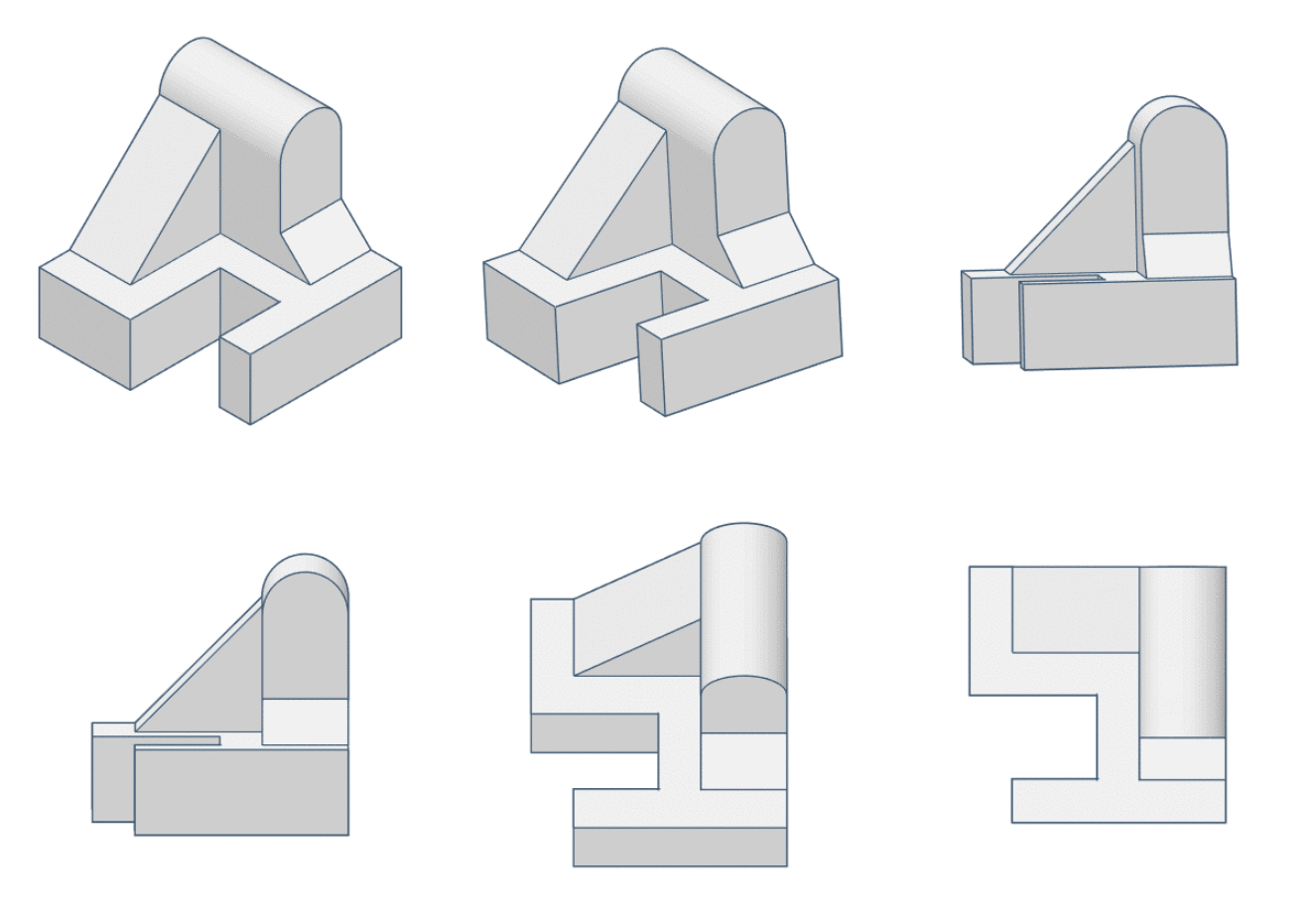
Now we are going to draw the views of a figure that combines all those elements in one.
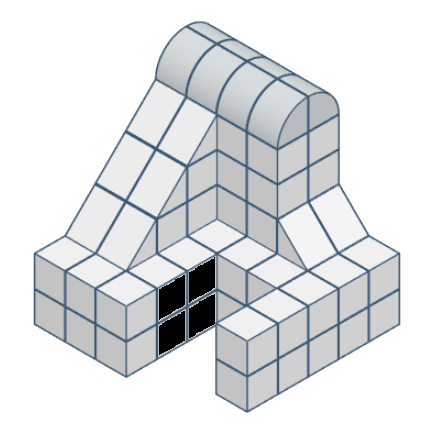
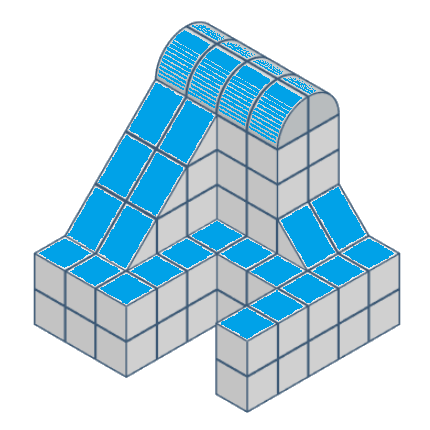
The faces that can be seen from each of the views are:
Front view
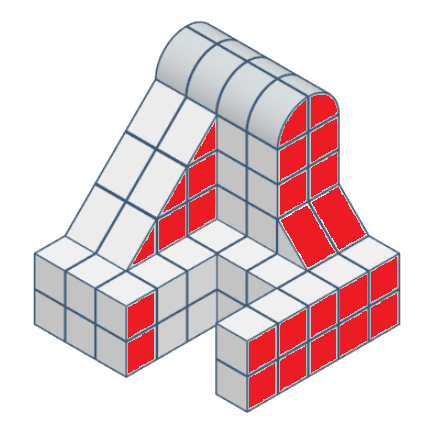
Side view
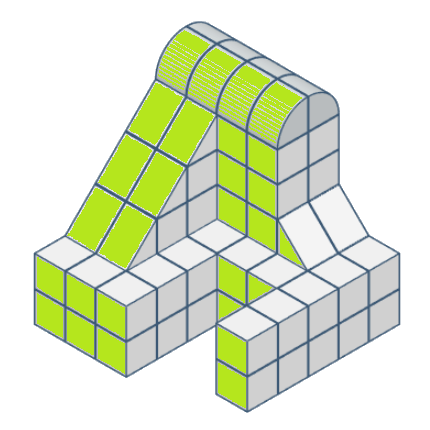
Top view
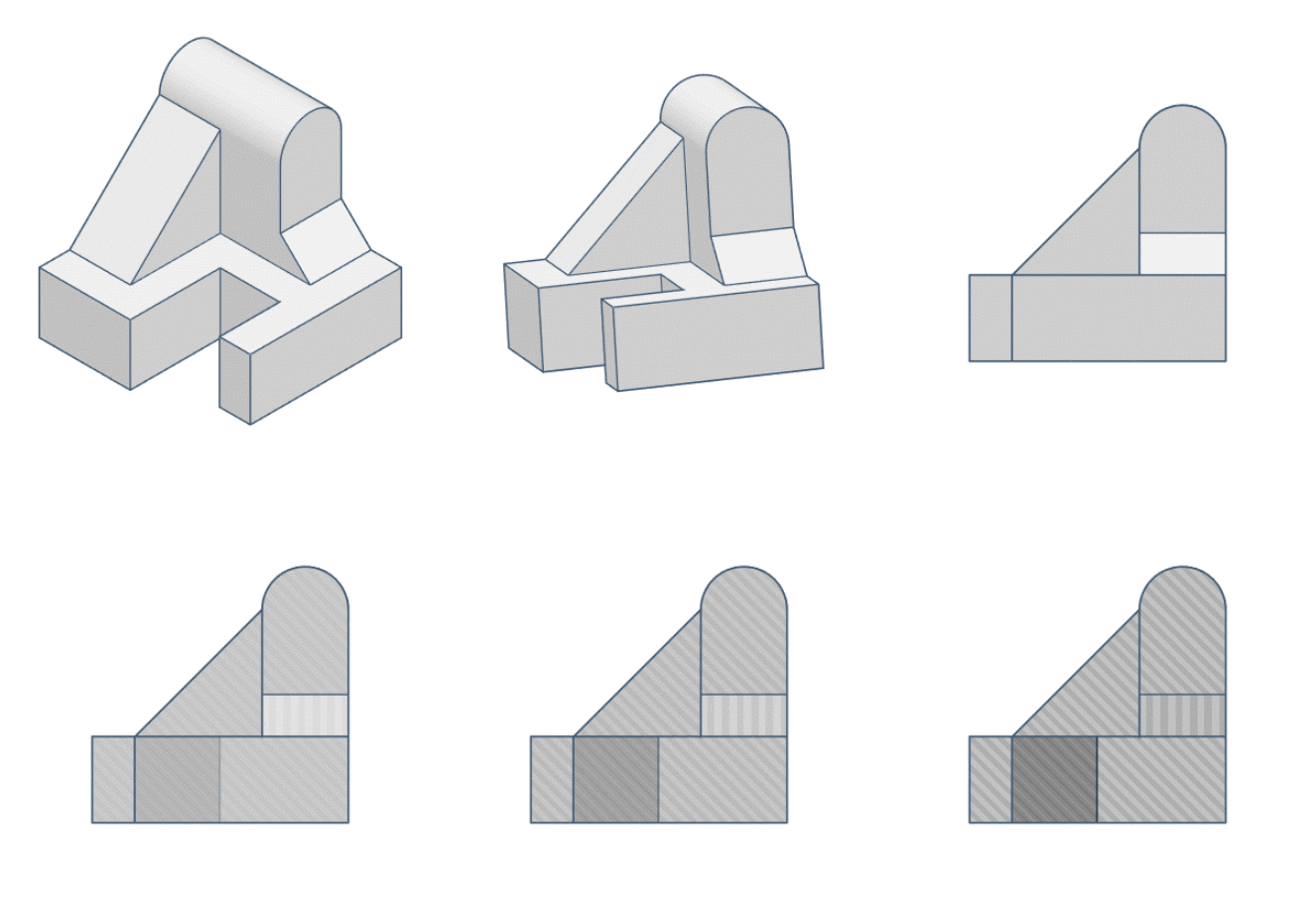
In this model we must pay special attention to the hidden face and to the semicylinder on the top:
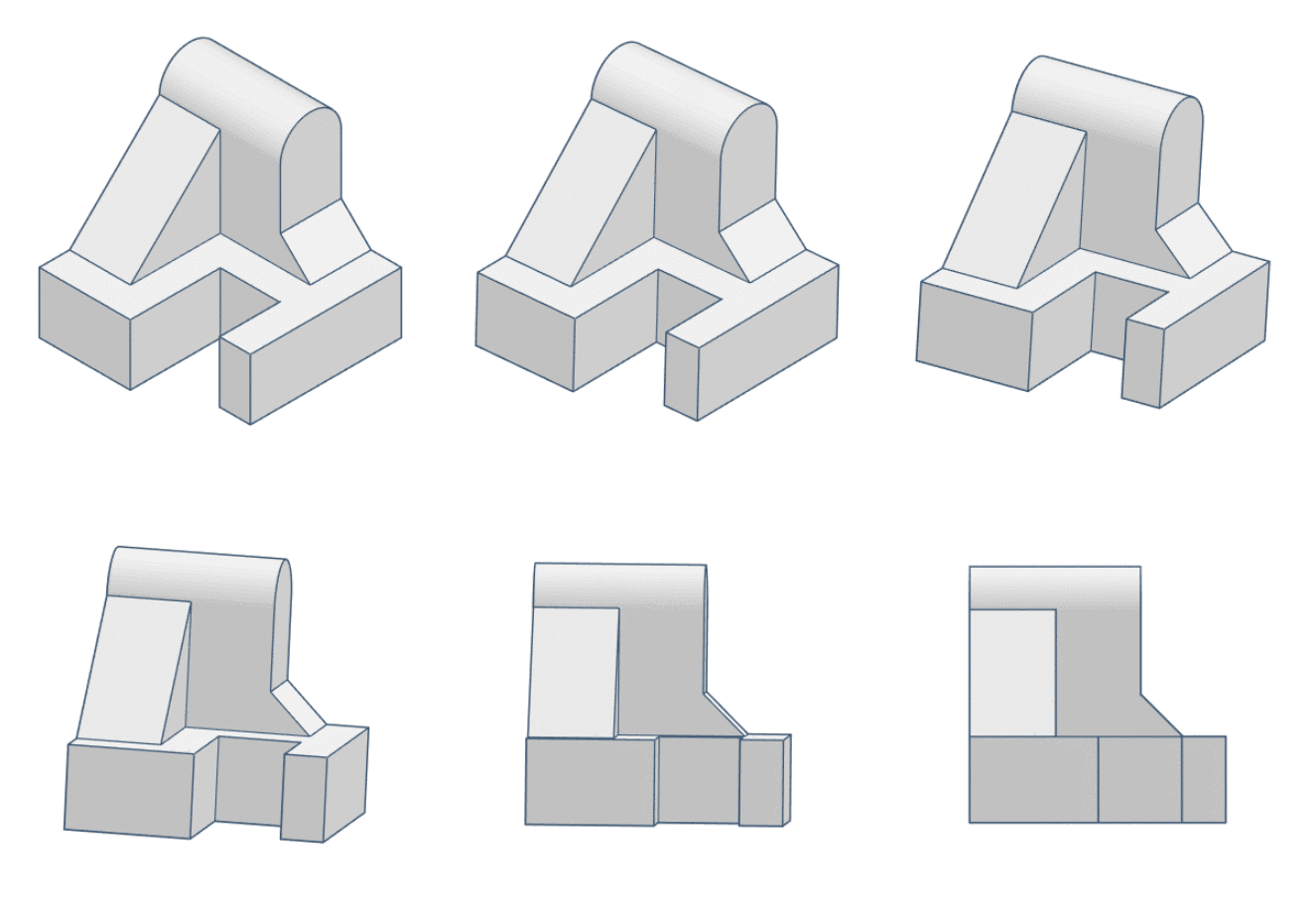
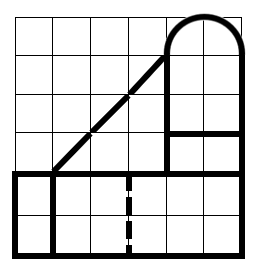
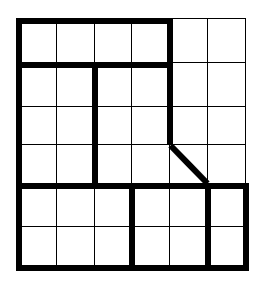
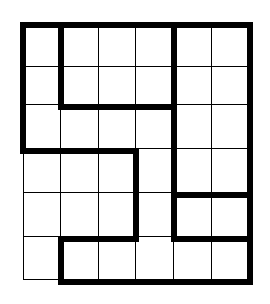
So, the views are: