Sheet 4:

Exercise 1: Calculate the equivalent resistance of the following circuits. Take into account that components through which electric current does not flow must not be considered when calculating the equivalent resistance of the circuit.
a)
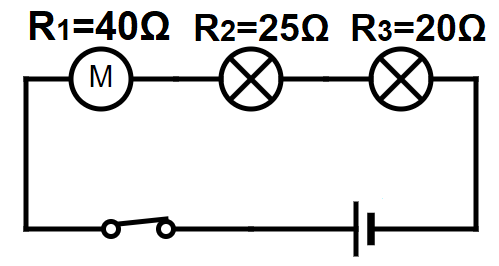
b)
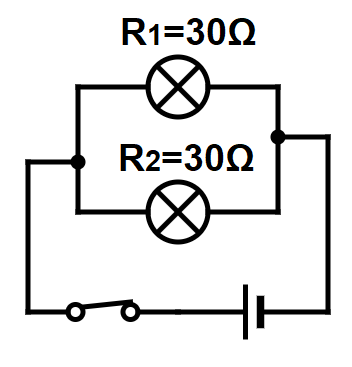
c)
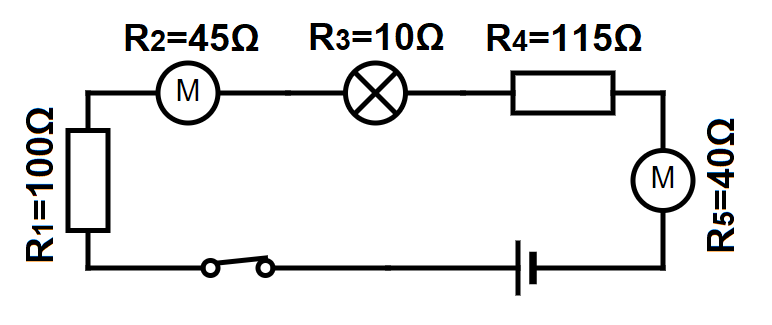
d)
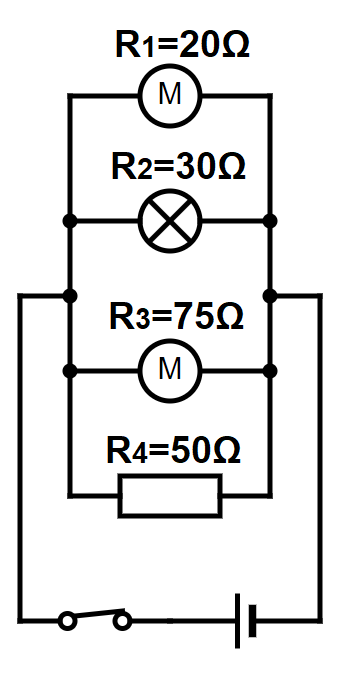
e)
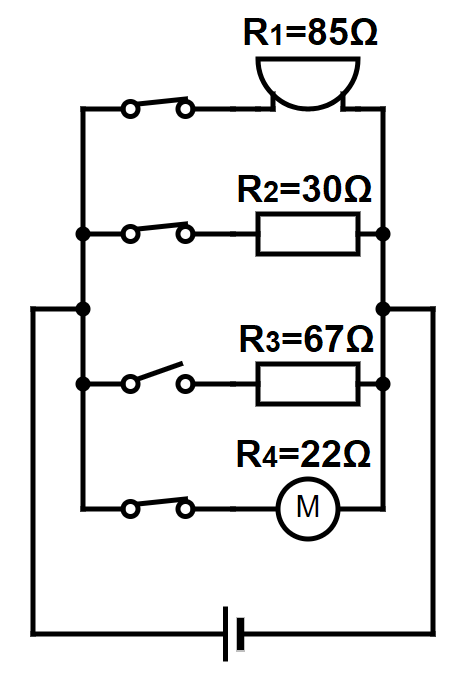
f)
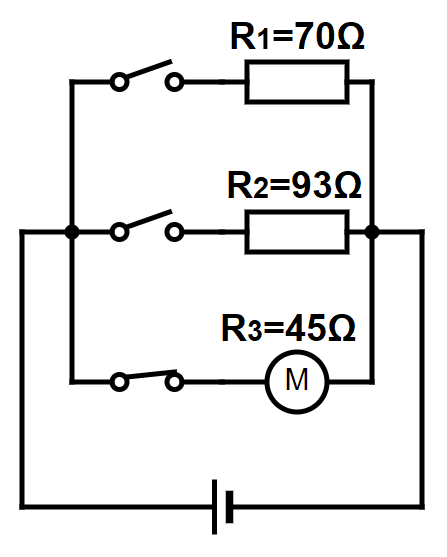
Ejercicio 2: Fill in the table with the intensity, voltage, resistance, power and energy of each of the components. What kind of circuit is it? (Series/parallel)
Note: consider that the circuit is connected for one minute when calculating the energy.
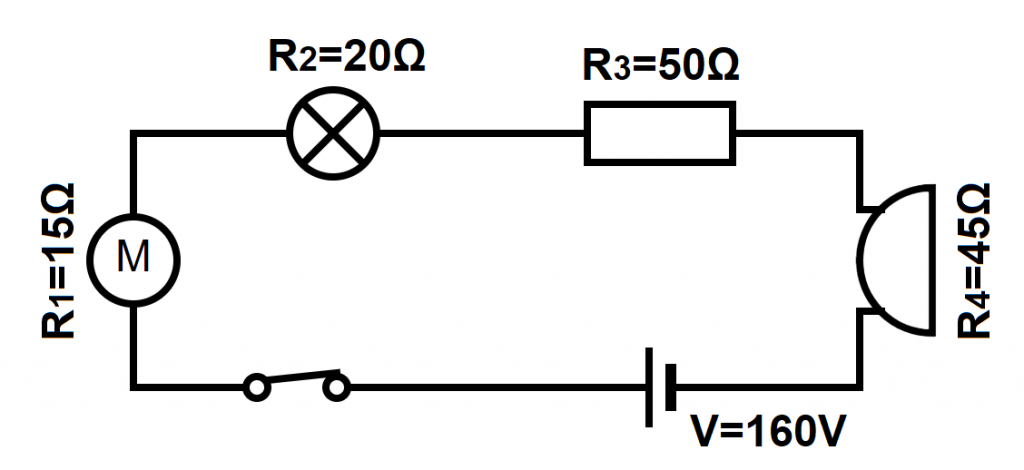
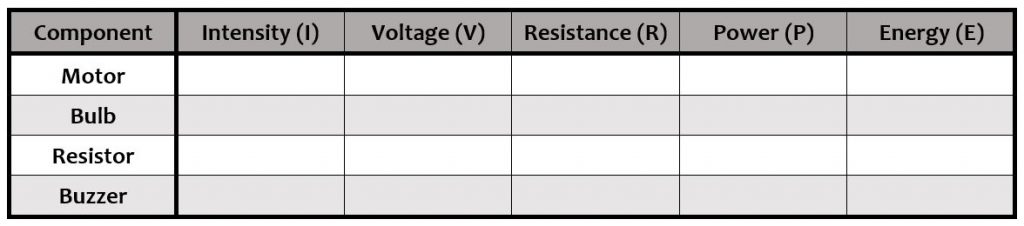
Exercise 3: Fill in the table with the intensity, voltage, resistance, power and energy of each of the components. What kind of circuit is it? (Series/parallel)
Note: consider that the circuit is connected for 20 seconds when calculating the energy.
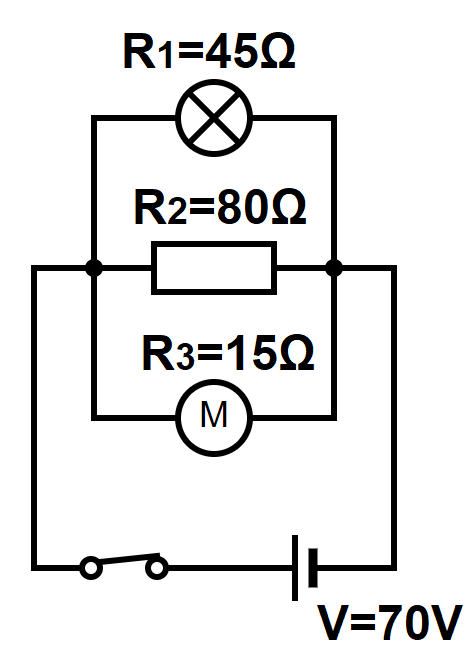

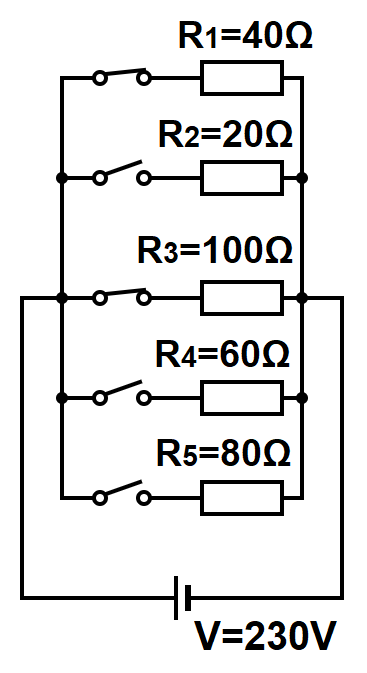
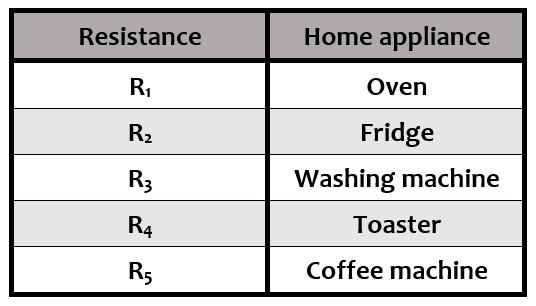
Exercise 4: The electrical installation of a house is, basically, a parallel circuit in which each component can be turned on or off with a switch. The circuit below is a simplified version of an electrical installation in which only the kitchen devices have been included. As you can see, even though some appliances, such as the washing machine, for example, use motors, all of them have been represented as a resistor (as it is usually done). You can check what component corresponds to each resistance in the table on the right.
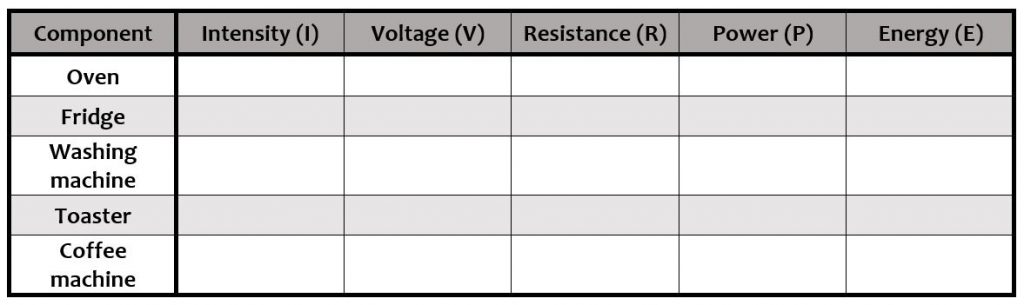
Fill in the table taking into account that not all switches are closed and that the voltage of the source is 230V, which is the one used by the electrical grid in Europe.
Note: consider that the circuit is connected for five minutes when calculating the energy.